









By Kemo Cham
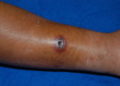
Almost two months of investigations prompted by reports of multiple skin lesions in northern Sierra Leone has revealed Heamophilus Ducreyi as the causative agent of the condition.
The National Public Health Agency (NPHA) said on Friday that the outcome of the investigations it conducted in collaboration with the Ministry of Health confirmed the presence of an active outbreak of Cutaneous Ulcers, affecting over 200 people across communities in the Safroko Limba Chiefdom of Bombali District.
Reports of “mysterious” skin infections in the Kayassic Community first appeared late last year. The NPHA and the Health Ministry in a statement dated November 18, announced the launch of an investigation. The infections mainly affected children of schooling going age, it said then, noting that 28 people had presented with skin lesions.
According the statement on Friday, the health authorities say as of December 24, 267 cases had been reported. And for 96 of these, the Haemophilus Ducreyi was confirmed as the causative agent.
A spokesman for the Health ministry told ManoReporters that PCR tests on samples were conducted in-country and the results confirmed at the Institute Pasteur de Dakar of Senegal to reach the conclusion.
Data shared by the agency shows that cases have spread to 27 communities in the chiefdom. The good news is that 150 people have already recovered from the infection, with no reported death. But a total of 211 contacts were said to be under investigation.
Heamophilus Ducreyi is known to cause ulcers. In many countries where cases of the bacterial disease have been recorded, it mainly caused genital ulcer in victims. But it also causes the infections in other parts of the body.
According to NPHA, none of the victims in the current outbreak in Sierra Leone displayed genital ulcer. But as in other outbreaks, majority of the cases here are said to be children – aged 5 to 15.
“Clinical symptoms include painful, slow-healing skin ulcers primarily on the extremities, often accompanied by regional lymphadenopathy and mild constitutional symptoms,” the agency says in its latest statement, which was signed by its Executive Director, Prof. Foday Sahr.
It also says that no case severe enough to require hospitalization was recorded.
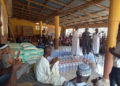
The NPHA says it has activated comprehensive response protocols, including enhanced surveillance and laboratory testing, community-based case management and appropriate clinical care at local facilities, as well as infection prevention control measures, among others.
Asked why it took so long for conclusion of investigation, Harold Thomas, Risk Communication Lead at the Ministry of Health, said the multiple microbacterium associated with the infections required detailed investigation.
“This presentation – that is, the cutaneous ulcer – can be due to a number of causative organisms,” he said, citing Buruli Ulcer and neglected tropical diseases as examples of conditions presented with similar signs and symptoms.
“When there is a cluster of cases of the same signs and symptoms, then there is a concern and you need to properly investigate so that you don’t miss out on any important fact,” Thomsa said.
Thomas, who is also the Manager of the Health Education Programme in the Health Ministry, warned that because it is a disease of contact, people are exposed to the infection through sharing of clothing and close body contacts with infected persons.
He added that ongoing investigation seeks to established the actual origin of the bacteria, stressing that the important thing is that the situation is under control.