








By Kemo Cham
KnowHep Foundation Sierra Leone is set to embark on massive hepatitis screening exercise in a new project that targets at risk women and new born babies.
Some 1000 pregnant females will be targeted in the initiative as part of the Foundation’s drive to raise awareness and promote access to services for Hepatitis B, a major public health issue.
KnowHep Foundation, a member of World Hepatitis Alliance, is dedicated to raising awareness about the disease which is considered by the World Health Organization (WHO) as a growing global public health crisis.
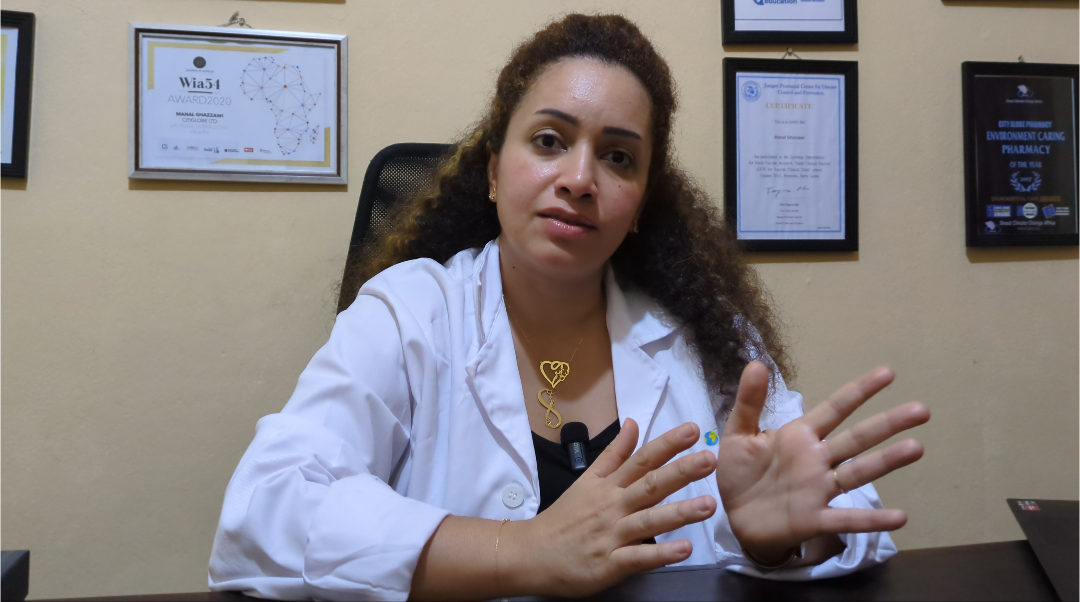
Dr Manal Ghazzawi, Founder of KnowHep Foundation Sierra Leone, is leading implementation of the B-Free project, in collaboration with the Hepatitis B Foundation and the Sierra Leone Ministry of Health (MoH). The Specialist Pharmacist is renowned for her advocacy on Hepatitis and Diabetes. She disclosed that this one-year long project entails screening of the pregnant women, vaccinating those at risk, as well as babies born to infected mothers.
“Hepatitis is becoming a global public health concern and it is a public health concern in Sierra Leone too,” Dr Ghazzawi tells ManoReporters.
The project will be implemented in two of the country’s major maternity centers – the Princess Christian Maternity Hospital (PCMH) in Freetown, which is the country’s main referral center for maternity care, and the Masanga Hospital in Tonkolili District, which will cater for the rural segment of the population that the project provides for.
For Dr Ghazzawi, this project is part of her advocacy for the Sierra Leone government to integrate mother-to-child transmission of Hepatitis into existing structure of the country’s HIV elimination programme.
“The screening will be done first and then follow up of pregnant women, ensure vaccines are available in each of the delivery wards, and ensure babies are vaccinated within 24 hours after birth,” she says.
Hepatitis is an inflammation of the liver, and it is most often caused by a virus, although some infections are linked to drug or alcohol abuse, toxins or autoimmune diseases.
There are five main types of Hepatitis, known as A, B, C, D and E.
Types A and E, which are milder, are typically transmitted via contaminated food or water. Types B and C are transmitted via contact with body fluids of an infected person.
Hepatitis D, on the other hand, is transmitted through direct contact with infected blood, blood products, or sexual fluids, and only occurs in individuals already infected with Hepatitis B. Common modes of transmission for this type include sharing needles, unsafe sex, and sharing personal items like razors. There is also small reported cases of mother-to-baby transmission.
Hepatitis B and C are responsible for most mortality and morbidity globally, according to WHO. They cause more annual deaths worldwide than HIV, malaria, and tuberculosis combined.
Most people do not experience any symptom when newly infected with Hepatitis B. But when symptoms show, they are in the form of jaundice, fatigue, abdominal pain, and dark urine.
Acute forms of Hepatitis can last less than six months, while chronic cases can lead to cirrhosis or liver cancer and eventually death.
The UN health agency says Africa is one of the most endemic regions for Hepatitis B virus, carrying roughly 18% of the global burden, representing an estimated 7.5% prevalence of the disease among the general population.
The WHO data also show that more than 91 million people in the Africa region are affected by chronic viral hepatitis, with 82 million living with hepatitis B, and 9 million living with hepatitis C.
Dr Ghazzawi has been involved in advocacy against this disease since 2014. And her charity, KnowHep Foundation, established in 2019, has been engaging in community outreach and provision of screening and vaccination services targeting some of the most neglected communities.
She cites studies indicating that Mother-to-child transmission is the most common form of transmission of the disease, hence the focus of her advocacy.
“It is sad that on a daily basis, (children are being affected) by a preventable disease,” she says in an interview, noting that it’s unacceptable for any child to suffer from such preventable diseases.
In Sierra Leone, 1 in 8 people are infected with Hepatitis B, data from a 2022 systematic review and meta-analysis published in the American Journal of Tropical Medicine and Hygiene show. That is approximately 13% of the population, according to the report published in May 2023.
In spite of a WHO recommendation, Sierra Leone doesn’t provide the Hepatitis B birth dose for babies born from infected mothers.
The Expanded Programme on Immunization (EPI) in the Ministry of Health only provides the Hepatitis B vaccine as part of the Pentavalent Vaccine, which is given to children at six weeks, 10 weeks and 14 weeks after birth. Dr Ghazzawi says this leaves babies vulnerable at the critical stage of their life. She is seeking to contribute in efforts to change this through the B-free Project.
“If we simply take care of the pregnant women during pregnancy and ensure that the babies receive their vaccines within 24 hours, that will help to prevent further complications as they grow older, because 90 percent of babies under the age of five are liable to have chronic hepatitis B. That is 9 out of 10 babies have the tendency to become chronically infected with hepatitis B, which will later translate to liver cancer and liver failure,” she says.
Only 14 African countries are implementing the WHO recommendation for Hepatitis birth dose. Sierra Leone is set to be the latest country, after it was reportedly recently approved for funding by the Global Vaccine Alliance – GAVI.
“If there is a pregnant woman now, it is good for her to demand that she wants to get tested for hepatitis B, and if she is infected, it’s good for her to know that she is going to pay out of her pocket to do test, to ensure whether she needs treatment or not, and afterwards she has to make sure that the baby is vaccinated within 24hours. Then they continue with the EPI’s pentavalent vaccine,” says Ghazzawi.
KnowHep Foundation is waiting for the approval of the Scientific and Ethics Committee of the Health Ministry to start implementation of the project.
The plan incorporates data collection, with the objective of making a publication Ghazzawi hopes can inform policy and serve as a preliminary study “to help other facilities adopt the strategies to be used and replicate efforts with the goal of sustaining its gains.”