






By Brima Sannoh
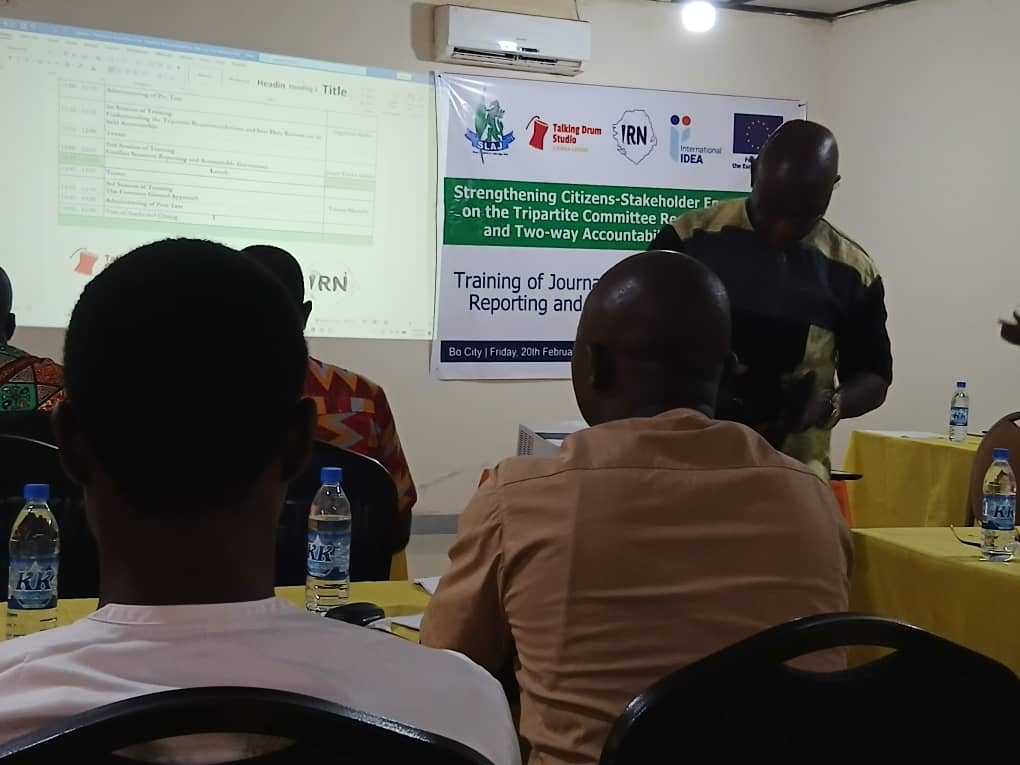
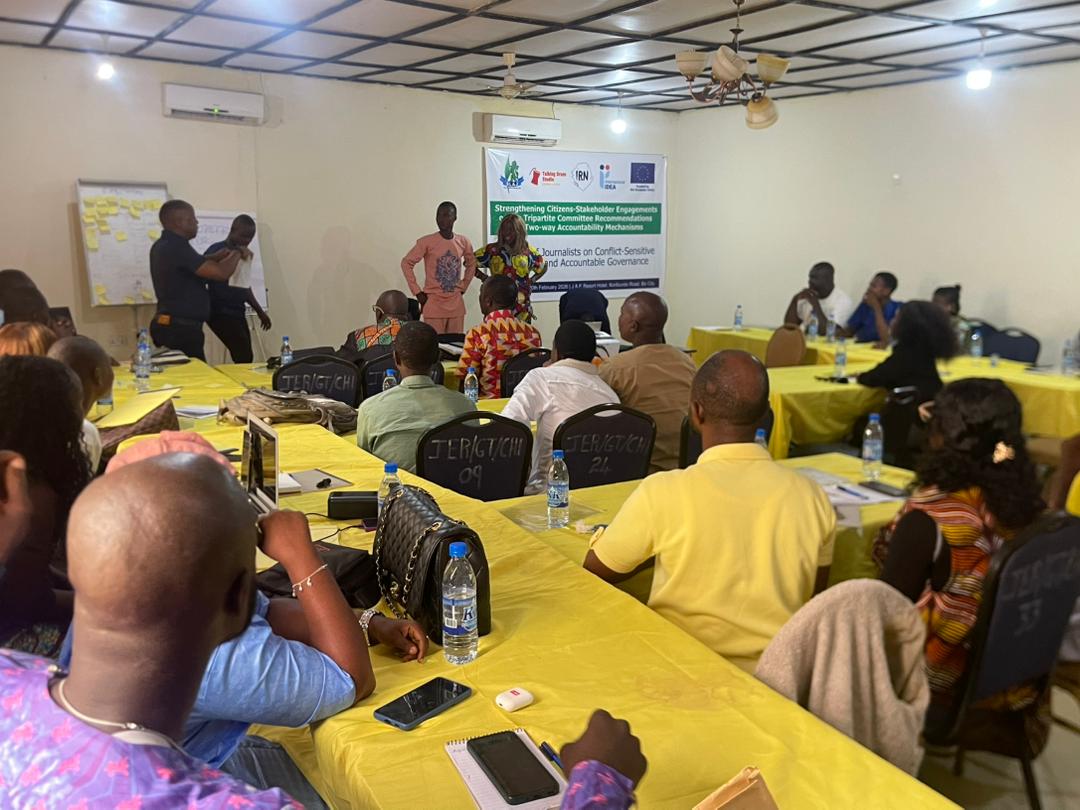
The Sierra Leone Association of Journalists (SLAJ), in collaboration with Talking Drum Studio, has concluded a regional training for media practitioners on conflict-sensitive reporting.
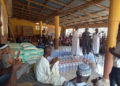
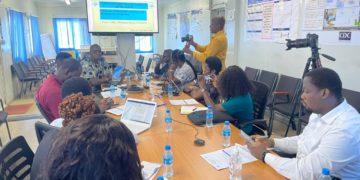
The training conducted at the J and E Hotel in Bo brought together participants from across the southern region, and it’s aimed to strengthen responsible reporting, particularly in relation to the post-2023 elections.
Participants were equipped with skills to promote accurate, balanced and peace-oriented reporting within their respective communities.
Addressing participants during the training, Augustine Sheku, State Counsel for the Southern Region, urged journalists to exercise extreme caution in their coverage, particularly on issues relating to the Tripartite Recommendations. He noted that Sierra Leone remains fragile and warned that reckless or inaccurate reporting could inflame tensions.
“Unless we want to be hypocritical, Sierra Leone is still sitting on a time bomb. One act of misinformation can lead to serious consequences,” he cautioned.
Mr Sheku stressed that the media must avoid misrepresenting legal matters, especially concerning the criminal libel law. He warned journalists against prematurely declaring that the law has been completely decriminalized and advised them not to allow themselves to be used by politicians to advance partisan interests.
“You have a moral obligation to promote peace. Your message on the Tripartite Recommendations should be framed in a way that educates the public and strengthens national stability,” he said.
In his contribution, James Tamba Lebbie, Lecturer at the Mass Communication Department at Fourah Bay College, University of Sierra Leone, described journalists as trustees of the public who serve a diverse audience, including politicians, ordinary citizens, persons living with disabilities and minority groups. He urged journalists not to betray the trust placed in them, noting that although they are products of their environment, they must strive to remain professional in the discharge of their duties—carrying out their work without malice, fear or favour.
Speaking to ManoReporters in an interview after the training, Mohamed Konneh, Financial Secretary of SLAJ, said the initiative was inspired by the Tripartite Recommendations that emerged after the 2023 general elections. He explained that following the elections, the main opposition All People’s Congress (APC) rejected the results, alleging that the polls were rigged. This led to engagements involving the international community, the Government of Sierra Leone, and the APC, with the aim of ensuring national stability and allowing the country to move forward at a time when tensions were high and development activities had slowed.
According to Mr Konneh, the dialogue process produced eighty recommendations, ten of which are people-centered and critical to sustaining peace and security in Sierra Leone.
“As media practitioners, we have the responsibility to ensure that journalists fully understand these recommendations,” he said. “When they do, they can effectively pass the information on to the public. An informed citizenry reduces the risk of returning to conflict.”
Konneh described journalists as the conscience of society, noting that whatever is broadcast on radio, television, or published in newspapers has the power to either build or undermine the nation.
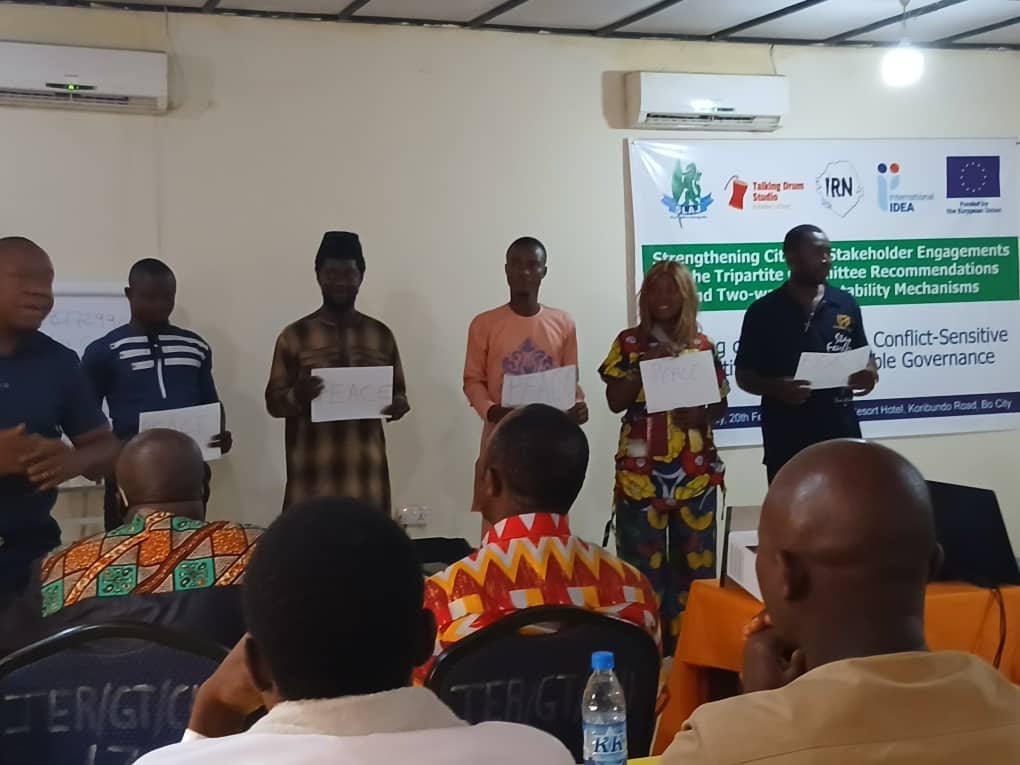
Also speaking to ManoReporters after the engagement, Tommy Marcaurthy, Lead Trainer and Head of Programmes for the Sierra Leone Strengthening Democracy Programme at Talking Drum Studio, explained that the project is funded by the European Union through International IDEA. He said the initiative seeks to empower journalists with enhanced reporting skills to deepen public understanding of the Tripartite Recommendations—specifically recommendations 25, 28, 29, 30, 32, 33, 72 and 78—while promoting conflict-sensitive and common-ground reporting approaches.
“Journalists are the gatekeepers of information. If they are better equipped with the right knowledge, skills and tools—especially broadcast journalists—we can sustain peace and unity, even when some people believe it is fragile,” Marcaurthy stated.
Other participants shared their perspectives on the relevance of the training. Jannie Kamara, Station Manager of Voice of Faith Radio in Bo, described the engagement as enlightening and practical. She suggested that a tribal language hub should be established by SLAJ and its partners to help create wider awareness and deeper understanding of the Tripartite Recommendations among grassroots communities.
“The aspect of non-adversarial communication stood out for me. It will help us communicate messages on the Tripartite Recommendations without causing harm and also guide how we relate and apply the same method in our daily lives,” she said.
Daniel Kaitibah, Acting Station Manager of Moyamba District Children’s Awareness Radio (MODCAR), described the training as timely and impactful, especially as the country looks ahead to the 2028 elections.
“This training will help soften the ground among political actors and citizens. As media practitioners, we serve as the link between the people and those in authority, and it is incumbent upon us to play that role with professionalism and care,” he stated.
Facilitators reiterated that the media plays a strategic role in safeguarding national stability at a time when public discourse remains sensitive.
Journalists were reminded of their responsibility to avoid misinformation, inflammatory language and partisan manipulation.
At the end of the training, participants expressed appreciation to SLAJ and Talking Drum Studio for organizing what they described as a timely and impactful engagement.
They reaffirmed their commitment to upholding professional standards and promoting peace through responsible journalism across the southern region.