





By Brima Sannoh
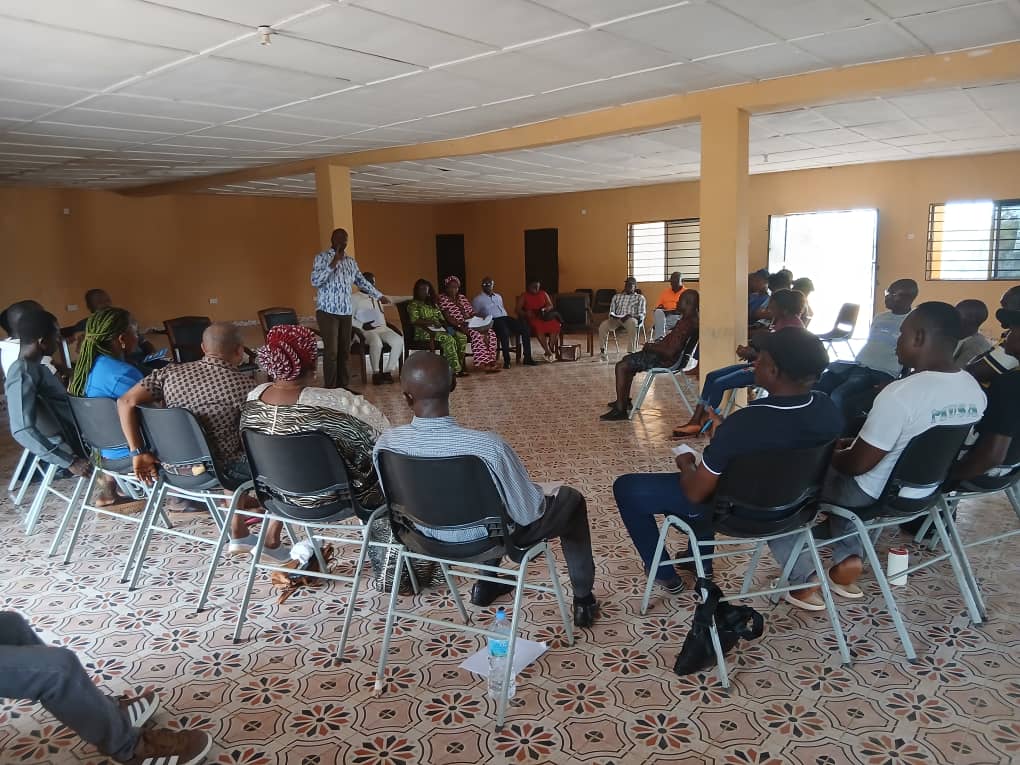
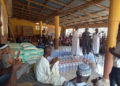
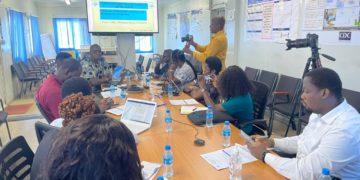
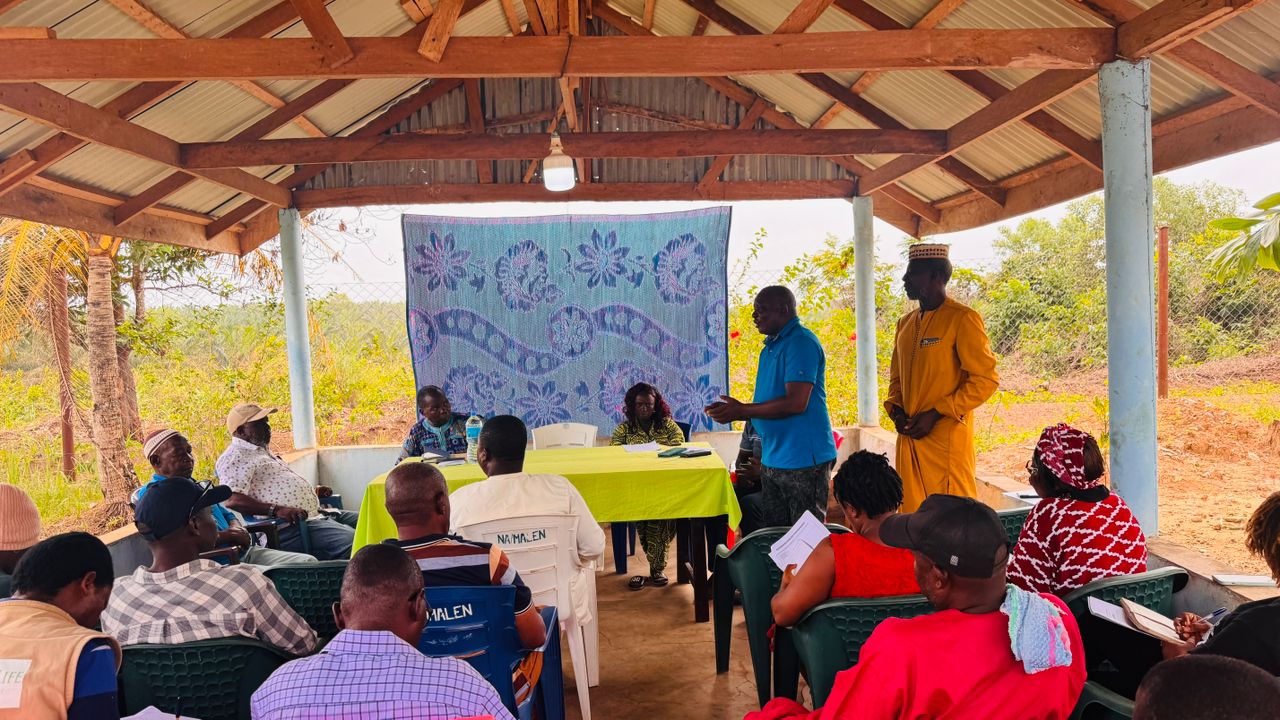
An experience-sharing session aimed at addressing land-related conflicts and promoting peaceful coexistence was held on Thursday, April 23rd, 2026, at the Community Center in Sahn Malen, Malen Chiefdom, Pujehun District.
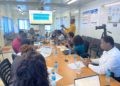
The engagement, organized by Land for Life Sierra Leone in partnership with the District Multi-Stakeholder Platforms (DMSPs) from Kenema, Port Loko, Tonkolili, and Pujehun, brought together chiefdom authorities, community members, and other key stakeholders.
The session created a platform for open dialogue, learning, and reflection on conflict management and natural resource governance.
Land for Life Sierra Leone is part of a multi-country initiative implemented in collaboration with civil society partners in Burkina Faso, Ethiopia, Liberia, and Sierra Leone, alongside Welthungerhilfe and the Civil Society Academy. The initiative seeks to strengthen natural resource governance as a pathway to ending hunger and reducing poverty.
Historical Context of Conflict and Emerging Peace
Beyond examining the conflicts that emerged in Malen Chiefdom following the establishment of a large-scale oil palm plantation by the Dutch multinational agribusiness company Socfin, participants also explored the progress made in restoring relative peace in the area. Since the company’s investment in 2011, tensions had arisen around land ownership, livelihoods, and community relations.
At the height of the crisis in 2019, violence broke out in Upper Malen, resulting in the deaths of two people during a protest, which led to a week-long curfew across the chiefdom.
Land-related conflicts remain a widespread challenge across Sierra Leone, particularly in rural chiefdoms where customary land ownership systems often overlap with statutory laws.
Weak documentation, unclear boundaries, and competing claims between families, communities, and investors have frequently triggered disputes.
In many parts of the country, large-scale agricultural investments and mining activities have further intensified tensions, as communities raise concerns over consent, compensation, and benefit sharing.
Following this period, a series of dialogue processes involving government, civil society organizations, and community stakeholders were initiated to address grievances and rebuild trust among affected parties.
Chiefdom Leadership Reflections and Land Governance Reforms
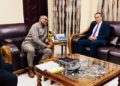
In his welcome statement at Thursday’s event, the Regent Chief of Malen Chiefdom, Alex Bockarie Lamin, expressed appreciation to Land for Life Sierra Leone and its partners for selecting Sahn Malen as a learning site for inter-district dialogue on land governance and peacebuilding. He warmly welcomed all visiting participants from different regions of Sierra Leone and assured them of their safety and full support throughout their engagement in the chiefdom.
“We are honored to receive all of you here in Malen,” he said.
The Regent Chief further reflected on the history of the chiefdom’s land challenges, noting that between 2012 and 2019, tensions escalated following the large-scale acquisition of land by Socfin. He said many community members at the time questioned the legality of the land acquisition process, alleging that land was transferred without proper consent from rightful owners.
Regent Chief Lamin emphasized that land remains the most valuable asset for his people, describing it as central to their survival and identity.
“Land is a very important asset for my people because it supports our entire existence,” he stated.
Chief Lamin also explained that confusion over land ownership had been a major driver of conflict in the chiefdom. He noted that in the past, many families did not know the exact size of their land holdings, while others falsely claimed ownership through corrupt practices, contributing to disputes that inflated the number of alleged land-owning families to as many as four thousand. He further cited long-standing boundary disputes between communities such as Bassaleh and Jorbohun, which have persisted for more than three decades.
However, the chief noted that progress has been made following a comprehensive land mapping exercise conducted in 2024 by the Land Commission with support from Socfin. According to him, the exercise reduced the number of recognized land-owning families in Malen to 443.
“Today, every land-owning family in Malen knows the exact number of acres they own after the mapping exercise, and they now have proper documentation for their land,” he stated.
The chief added that land lease payments are now being made based on verified acreage, helping to reduce disputes and improve transparency. He disclosed that effort is underway to ensure that payments to land-owning families are made through designated family land bank accounts.
Community Perspectives and Corporate Response
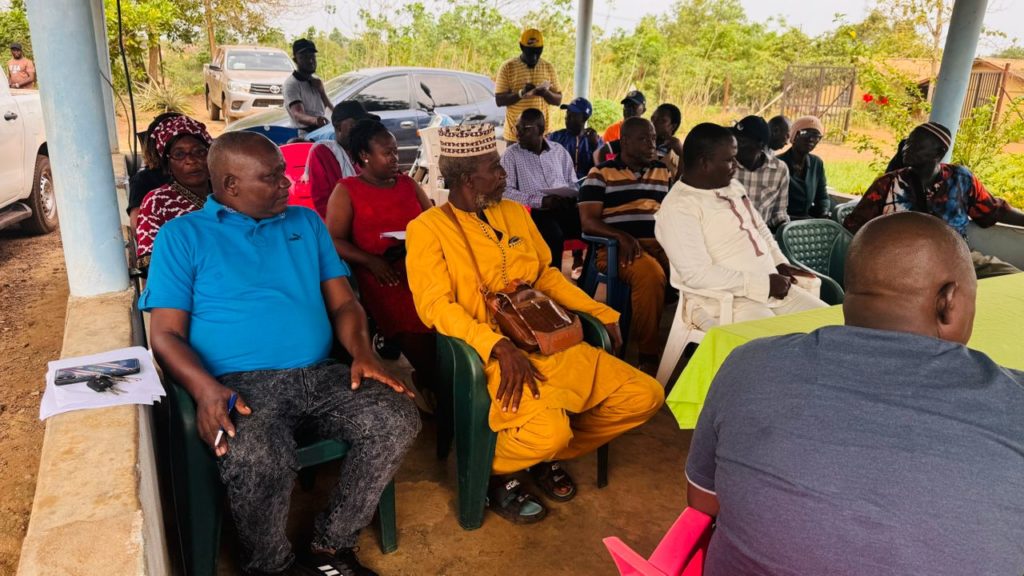
Madam Amie Sowa, a village chief and member of the Malen Land Owners Association (MALOA), shared concerns over the original land agreement and alleged marginalization of affected families. She called for fair employment opportunities and better inclusion of women in development processes.
Mohamed Metziger of Hopanda, acknowledged some development gains from Socfin but raised concerns about transparency of the 2011 land agreement and limited access to skilled employment for indigenes.
Responding, Patrick S. Alpha, Community Liaison Officer of Socfin, reaffirmed the company’s commitment to development, employment opportunities, agricultural support, and continued dialogue with stakeholders.
Stakeholder Dialogue and Pathway Forward
Jacob Wilson of Land for Life Sierra Leone commended the progress in peacebuilding and explained that the engagement was aimed at learning lessons for wider application, not intervention.
Maxwell V. Kemokai of Partners Initiative for Conflict Transformation (PICOT) highlighted national legal reforms such as the Land Commission Act and Customary Land Rights Act 2022, emphasizing inclusive land governance, especially for women.
Commissioner Charlie Tucker of the Land Commission praised the peace and cooperation in Malen and described the land mapping exercise as a landmark achievement in Sierra Leone’s land governance history. He encouraged continued inclusiveness and urged communities to use formal Land Commission structures to address disputes.
Discussions throughout the session revealed that Malen Chiefdom has made notable progress in reducing tensions, with improved relationship between the community and Socfin.
Participants from visiting districts also shared experiences from their own regions, identifying practical approaches to conflict prevention and land governance.
The Sahn Malen engagement ultimately underscored the power of dialogue, demonstrating that even long-standing conflicts over land can evolve into opportunities for peace, accountability, and sustainable development.