



By Kemo Cham

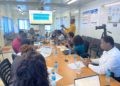
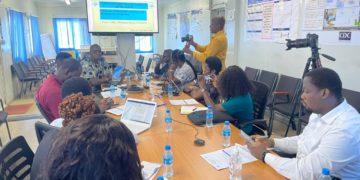
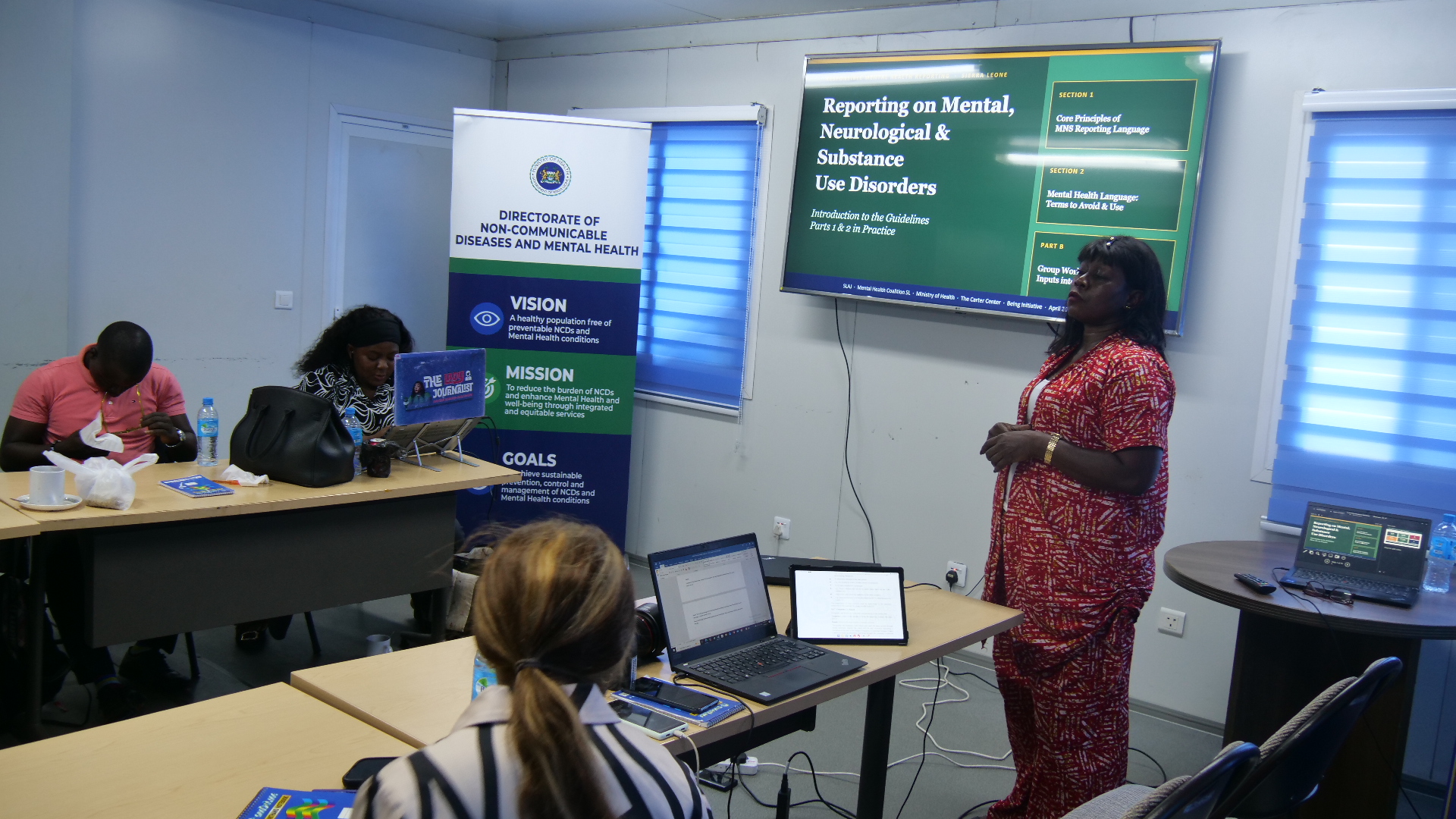
The Carter Center, in collaboration with the Ministry of Health Sierra Leone, on Thursday April 21st concluded a two-day training on mental health reporting for journalists. The participants were mainly members of the Health Reporters Network Sierra Leone (HRN-SL), but they also included government information officers and activists. The training was focused on ethical reporting, with the objective of preventing stigma and discrimination against persons with mental health disorders.
The Carter Center is a US-based non-profit founded by the late former US President Jimmy Carter and his wife. The training was organized as part of its Mental Health Program, which aims to reduce stigma and discrimination against people with mental illnesses, increase public awareness, and achieve equity of mental health care compared to other health services. It was also designed to develop a reporting manual for journalists and communicators.
In Sierra Leone, mental health remains one of the least prioritised sectors of the healthcare system, despite recent progress. With only one psychiatric hospital catering for a population of over eight million people, there is a 98 percent gap in access, according to data from the Ministry of Health, a situation largely attributed lack of resources and poor policy implementation.
“At the ministry we know that the fourth estate is very crucial if we want to make any advancement in improving the lives of people with mental health conditions,” said Dr Abdul Jalloh, Director of Mental Health and Non-Communicable Diseases in the Ministry of Health, whose office collaborated with the Carter Center to conduct the training.

The Sierra Leone Association of Journalists (SLAJ), also a partner in the training, coordinated with the leadership of HRN-SL to select identify the 10 participating journalists, who were drawn from various media houses in Freetown. SLAJ President Alhaji Manika Kamara said the training complemented his desire to see specialized reporting developed in the Sierra Leonean media.
“This training is very vital for us, because mental health affects every one of us, and the way misinformation is taking over the space, we as journalists, if we are not properly educated on the issues, there is no way we can inform the public properly,” he said.
Dennis Akpona, Senior Programme Associate at the Carter Center Headquarters in Atlanta, Georgia, United States, said that one of the main objectives of the training was to develop a reporting guideline that would have contributions from everyone. He noted that the draft document to be generated from the media engagement will be shared with relevant government ministries and the umbrella journalist body for their input and approval.
“It would be like an official document that would be out in the pubic for every journalist to have access to,” he said.
A major highlight of the two days training was a presentation by Psychiatrist Dr Jusu Mattia from the Sierra Leone Psychiatric Teaching Hospital. He said that the universal definition of healthy life is so all encompassing that it is impossible to have anyone person who is completely healthy, emphasizing the level of burden of mental health problems globally.
“If you don’t have physical health issues, you may have mental health issues or social problems…There must be one problem or another at any given point in life. So there is really no ideal period that you can say I am completely healthy,” he explained during a powerful point presentation of mental health disorders, their causes and ways to prevent or minimize their effects.
Dr Mattia also said that stress is a part of life, and that how people respond to it is what determines their state of mind.
“Things happen naturally, whether you like it or not. And when those things happen, there is tendency for you to generate internal unrest, that now propels you to either face those challenges or run away from them. So the amount of stress that you build up, or the way you deal with those stresses, now determines whether your mental health is stable or not,” he said.

Joshua Duncan, a prominent mental health advocates, made a presentation on stigma, on the context of personal life experiences. He argued that while Sierra Leone’s civil war had psychological effects on the population, as has been widely cited, it was an outcome of things that happened before it, which themselves had mental health implications.
“Mental health and stigma is like a double edged sword. On one hand you are challenged by the primary cause of the illness and on the other hand you are challenged with how people see it – the consequence of the stigma,” said Duncan, who heads the Mental Health Coalition Sierra Leone.
For Frances Kafula, Director of Government Information Services, the training speaks to a critical aspect of public health in Sierra Leone – mental health. Besides her position as a government employee, Kafula is also a mental health advocate, having co-founded an organization that advocated for patients’ rights and quality care, among others. She said that experience exposed her to the painful experiences people with mental disorders face in society. This, she noted, has forced many others to confront their illnesses in silence.
“Stigma, misinformation and cultural misconceptions remain significant barriers to care. This is why this workshop is so vital, recognising that the media is not just a channel for information, but a powerful force in shaping perceptions, influencing behaviour and driving change,” she said.
“Mental health, though often misunderstood, is not a marginal issue. It is central to national development, social cohesion and human dignity,” he added.