


By Kemo Cham
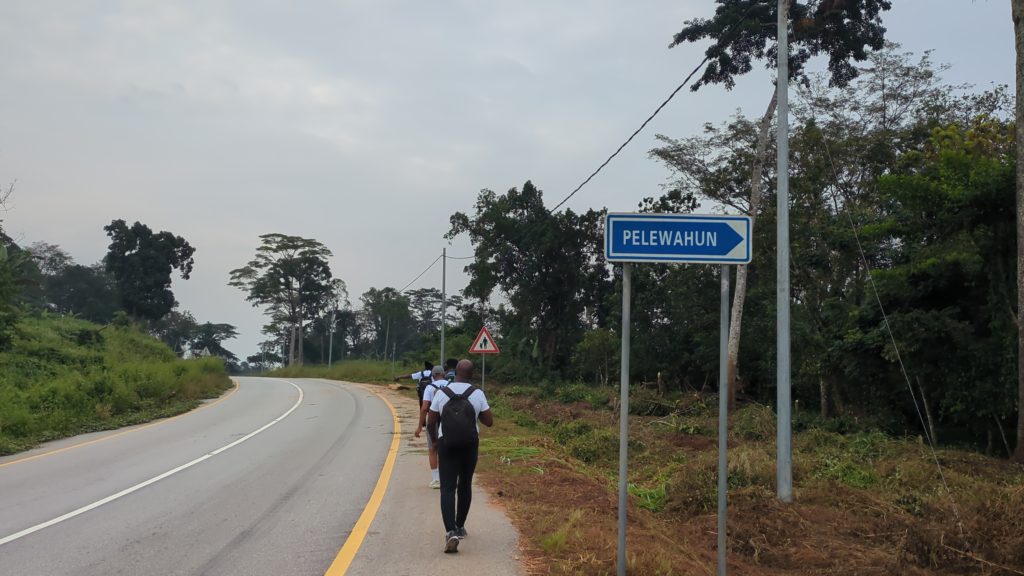
In Sierra Leone, a group of men have adopted a novel approach on awareness raising on two of the country’s most pressing and persistent public health challenges – maternal and child mortality.
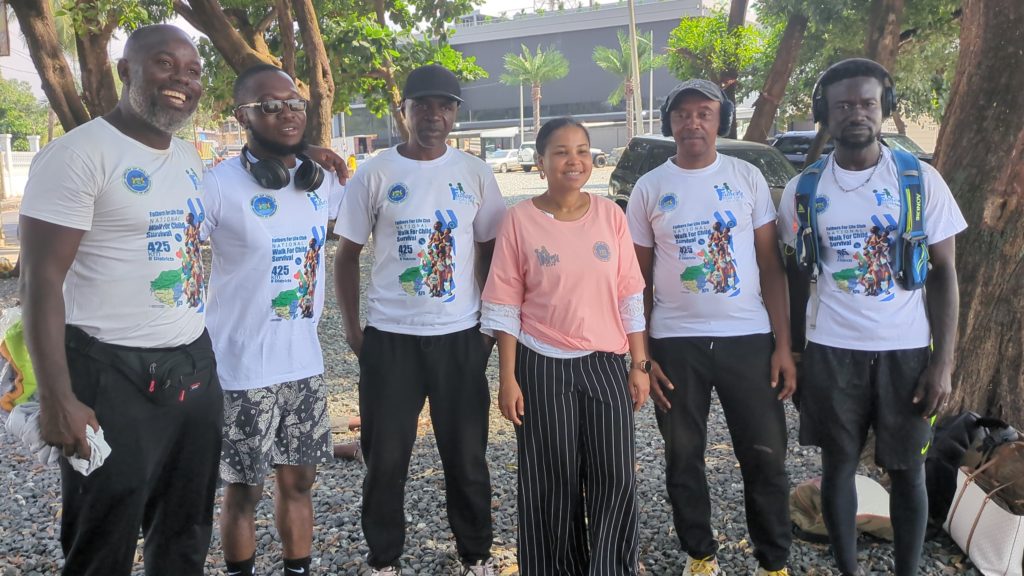
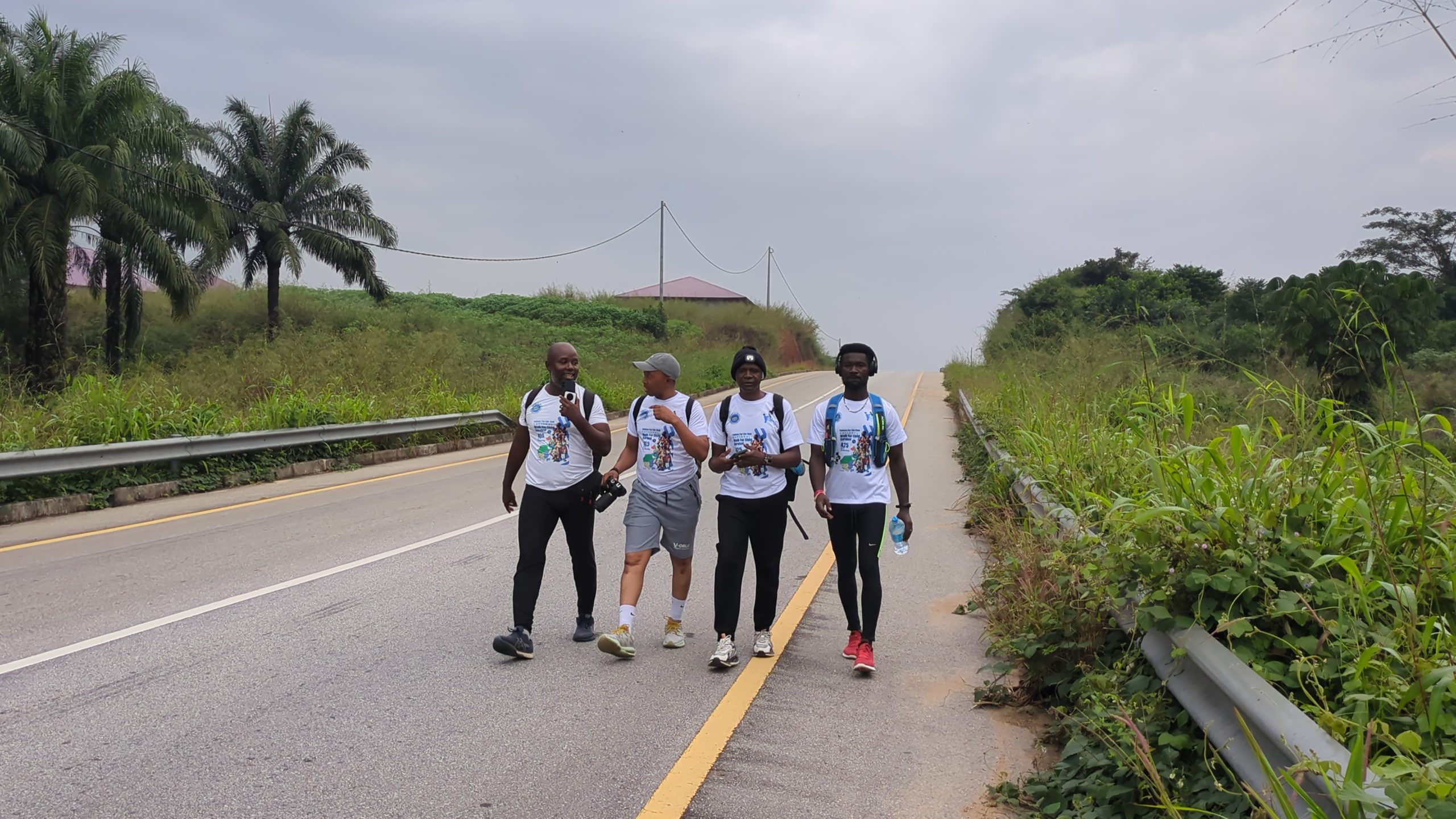
Members of the ‘Fathers for Life Club’ regularly walk long distances and sensitize men on the need for proper parenthood.
“The Fathers for Life Club educates and mobilises fathers across the country to be knowledgeable about child care and also to be present and involved in daily child care and child upbringing with regards to health,” Darlton John, Founder and Team Lead or the organization, explains.
A father of four, Darlton, who just turned 50, has spent 10 of his 20-year professional career in healthcare advocacy. He has spent half of this time working for Health Alert, one of Sierra Leone’s leading healthcare advocacy organizations. As Programmes Manager for the Civil Society Organization since 2022, he oversees projects that advocates for quality and affordable healthcare services, with a focus on reproductive, maternal and child health.
For decades, Sierra Leone confronted some of the world’s worst healthcare indicators, largely due to lack of resources and required infrastructure. The situation was made worse by the effects of the country’s eleven years (1991-2002) civil war. A 2014 World Health Organization (WHO) report, over a decade after the war, ranked Sierra Leone as the worst place on earth for a woman to give birth.
The last decade has witnessed significant progress in healthcare delivery in Sierra Leone, particularly in maternal healthcare. The most recent data released by the government in April 2025 indicates that Maternal Mortality Ratio (MMR) had reduced by 79% – from 1,682 deaths per 100,000 live births in 2000 to 354 in 2023. While this still remains a major concern for the government and its partners, an even bigger concern is lack of progress in the area of child mortality, which stands at around 94 deaths per 1,000 live births for under-fives in 2023.
Health Alerts’ work focuses on immunization, nutrition and WASH (Water, Sanitation and Hygiene), which are among the leading factors for these twin problems. Darlton says his involvement in national advocacy exposes him to the reality of a lack of awareness among parents, especially the men folks, on important life-saving recommended health seeking behaviours.
“I have been privileged to witness maternal and child deaths audit review meetings, which are hosted by the Health Ministry and its partners, which study reports from the healthcare sector. It is depressing,” he says.
This experience, Darlton says, inspired the Club to conduct a survey, which revealed that many fathers and male partners were not aware of basic life-saving health practices, like the number of times pregnant women should visit the clinic for antenatal care. A follow-up survey on post-natal care revealed similar knowledge gap on things like childhood vaccination.
“The responses were very appalling,” says Darlton. “Some of the fathers, some with three kids, some two kids, said they had no idea about these issues.”
These are the very issues the Fathers’ For Life Club members discuss with fellow men during their community engagement. As pioneer of the initiative, Darlton embarked on his first trek in 2021, from Lumley to Juba in the west end of Freetown – a four kilometre distance. He has done several such walks since then, including twice from Masiaka in the norther Port Loko District to the capital, Freetown – an over 70-mile distance.
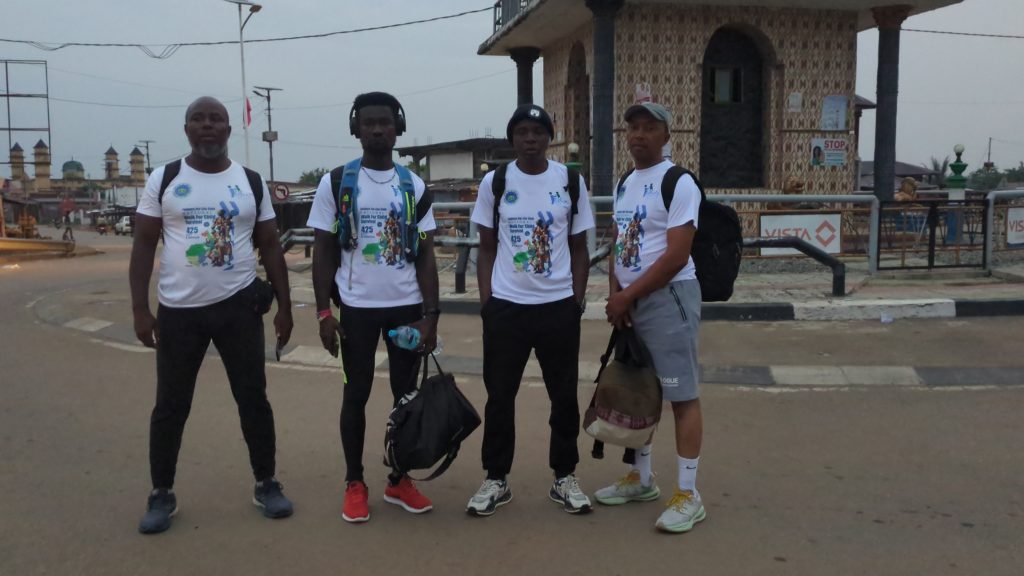
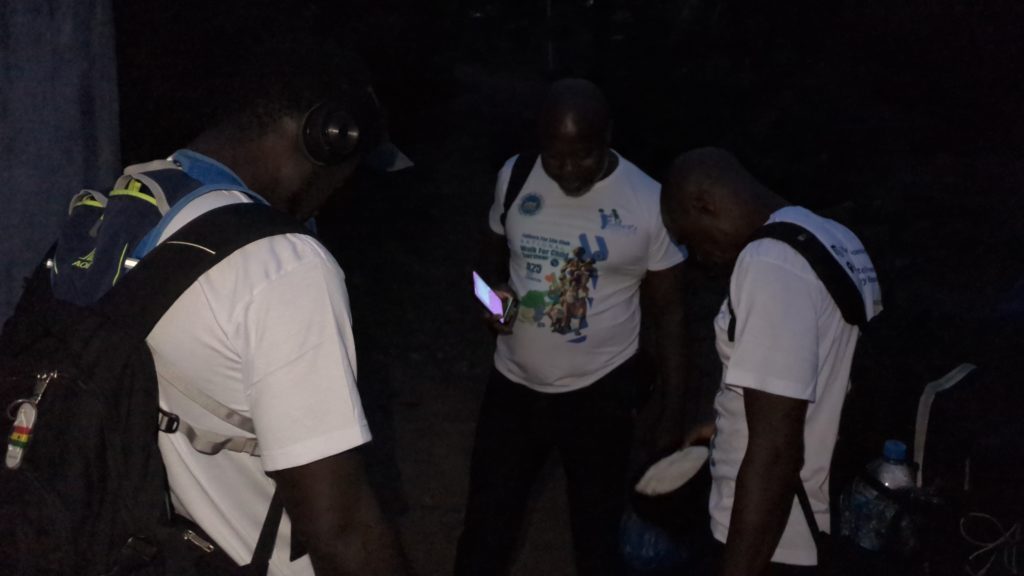
In mid-December, Darlton, accompanied by four other members of the team, embarked on their longest and most daring trek yet – from Kailahun in the far east of the country to Freetown – a distance of 425 miles. They covered eight districts in eight days, from December 15 to 22nd.
The journey, dubbed the ‘National Walk for Child Survival, started at around 5am in Kailahun Town. And after a few miles, the team had its first engagement in Songieyama Village. David Joseph Allieu presided over the meeting with a section of the residents of the community.
“They were surprised and amazed by the initiative and they were happy to see and hear about such advocacy,” says Mr Allieu, a father of three, who also works for Health Alert. He says the audience was visibly marveled by men advocating for the involvement of fellow men in the care of children.
The patriarchal setup of the Sierra Leonean society means that often stereotypical gender roles are strictly adhered to, leaving women with little room to express themselves. The message of the Fathers for Life Club trekking party was crafted to break barriers imposed by such a reality, says Darlton.
The team had night stops in eight locations, starting in Daru in Kailahun; Kenema City; Bo Ciy and Tiama in Bo District; Mile 91 and Makiteh in Port Loko District; and Waterloo in the Western Area Rural District.
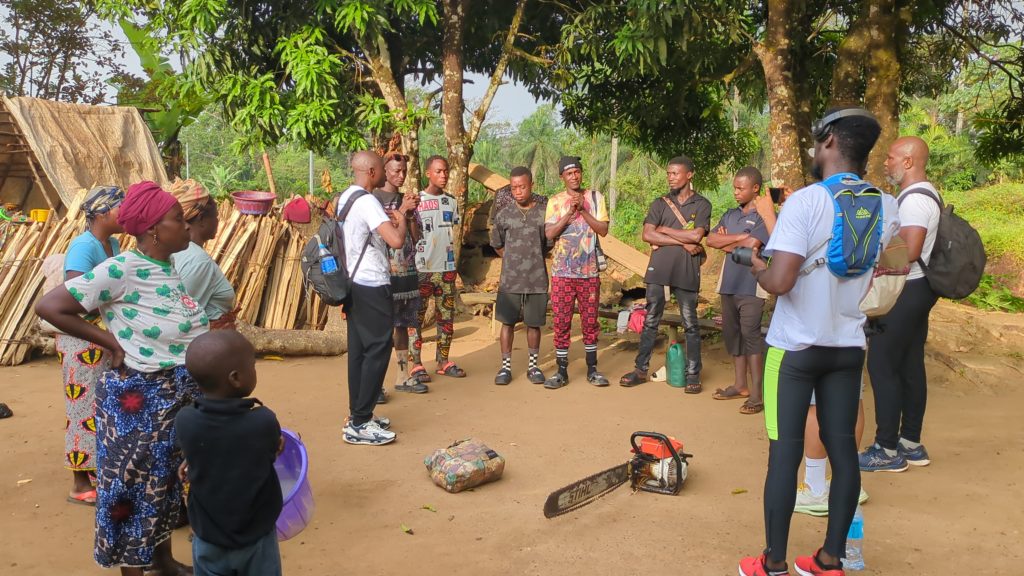
Over 500 people were engaged directly in these cities and towns, and the many villages between them; from men eagerly waiting for breakfast ahead of the hectic day’s hustle, to busy Okada (commercial motor bike) ridders looking for passengers, and businesspeople. They also visited health facilities. As Team Lead, Darlton also found time to take interviews from reporters along the way. The message in all of these was simple and straight forwards, he says. “Fathers need to be present. Fathers to be active in daily child care.”
The interactions provided a platform for the audience to ask pertinent questions inspired by real life experiences; like the Okada rider in the Kailahun Town of Pendembu, who was concerned about striking a balance between spending time on a queue at the health center and making best of his time hustling “to feed the many mouths” under his care.
Another Okada rider resonated with the message, recalling how he discovered that his wife was asking for more money than she required to pay for services in their local health center.
“This is one important reason for us as men to pay closer attention,” he said during a session at the Gblama motor park.
But not everyone resonated with the message. Some men walked away as soon as they heard the first part of it. Most of the time, the women showed more interest in the message, even though they were not the target. Back in Songieyama Village, for instance, after the engagement with the men, one of the women invited the team for a session exclusively for the women.
To the Fathers for Life members, this points to the core issue that inspire what the Club stands for – the behavioural problem in society towards these issues. Abdul Karim Sankoh, a member of the trekking party, says the reaction of many of the women during their engagement showed that they agreed with the idea but were afraid to speak out.
“It felt like we were helping to remove a burden on them,” he says.
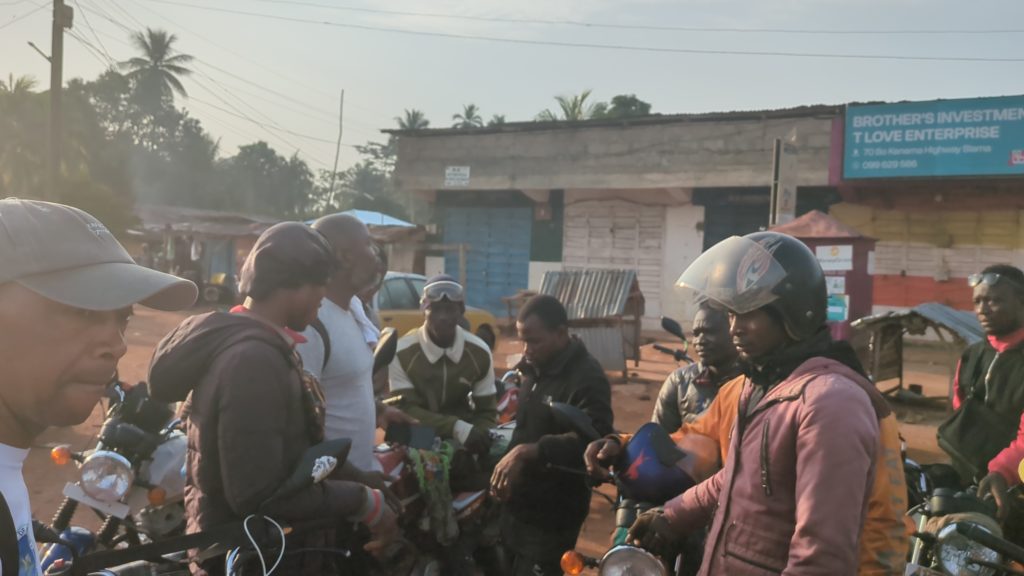
Sankoh, who is Media and Documentation Specialist at Health Alert, stressed that the posture of men who appeared disinclined to the message and the hesitation displayed by some women speaks to underlying obstacles imposed by cultural realities. The father of three says this realization invokes a feeling of justification for his participation in the walk.
“The story of child survival is never complete if fathers are not involved,” he says. “We know it can’t be every day for men to get involved in this. But once in a while shouldn’t be hard. We are saying you should just pay some attention.”
For Smart Kwame Hakawa, another member of the team, the mission was “a powerful” personal journey and commitment.
“This walk was more than a physical exercise. It was a way to raise awareness, inspire others and make a statement about resilience and dedication,” says Hakawa, who is an intern with the International Organization for Migration (IOM).
After massive investment in infrastructure and human capacity, the Sierra Leone government hopes to meet the United Nations Sustainable Development Goals targets of at least keeping MMR below 140 per 100,000 live births, and reduce neonatal mortality to at least 12 per 1,000 live births and under-5 mortality to at least 25 per 1,000 live births by 2030.
For there to be any chance of this happening, complementary initiatives like the Fathers for Life Club are crucial, says Dr. Lynda Farma-Grant, Manager for the National Child Health Program in the Ministry of Health. She was at hand to personally receive the team at the Aberdeen Beach, where the trek officially terminated on December 23rd. She says attainment of the national efforts requires improvement to access to care for children.
“There is the need to bring more fathers into this fold and to endeavour to sustain the activities on a yearly basis,” she says.