

By Kemo Cham
Sierra Leone has joined the growing list of countries signing bilateral health cooperation agreements with the United States Government.
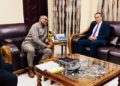
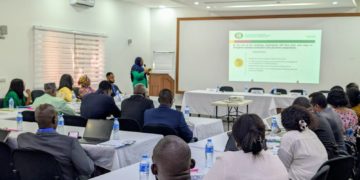
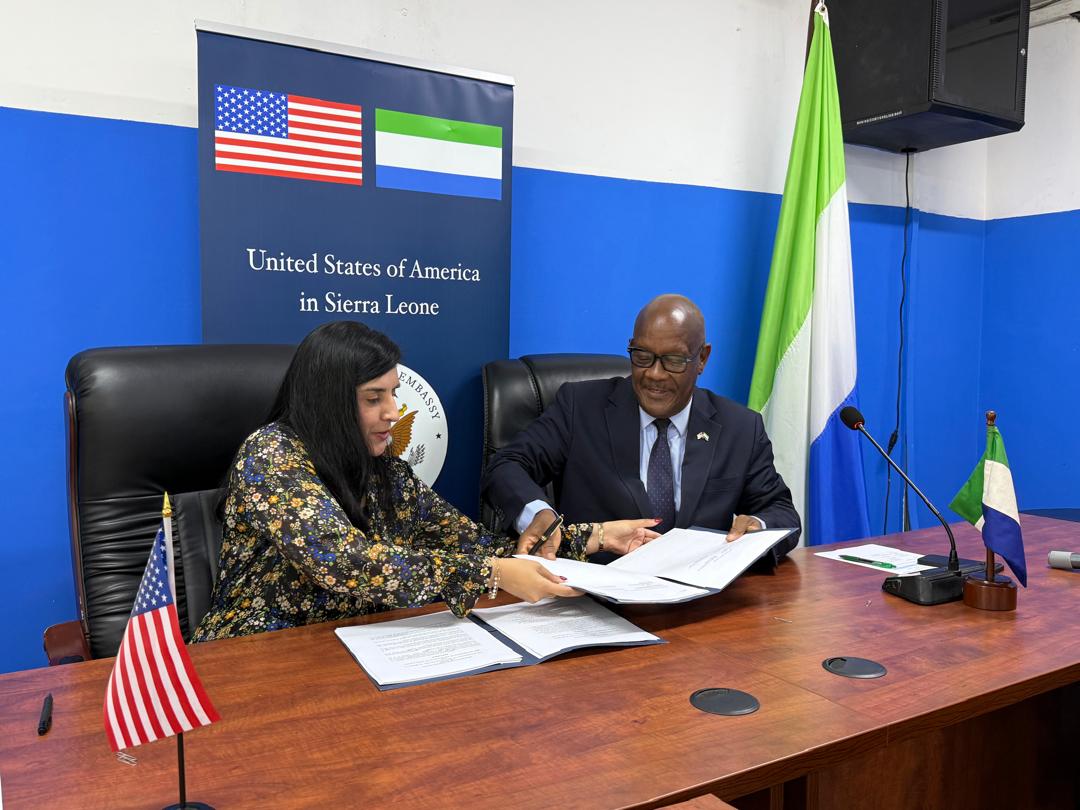
The agreement between the two countries was signed today, Monday December 22, according to a joint press release received from the Ministry of Health. The five-year agreement (2026–2030) signed by Minister of Health Dr Austin Demby and the Chargé d’Affaires of the United States Embassy in Freetown commits over USD 129 million in U.S. Government support, alongside increasing domestic co-investment by Sierra Leone, to deliver measurable and sustainable health outcomes nationwide.
Among others, the agreement seeks to reduce deaths from HIV, tuberculosis, malaria, and measles, lower maternal and under-five mortality rates and achieve near-universal HIV testing, treatment, and viral suppression. It also seeks to strengthen outbreak detection and response within 7 days of emergence.
“This agreement reflects Sierra Leone’s strong leadership and commitment to building a resilient, self-reliant health system,” Dr Demby was quoted in the joint statement. “It is not just about funding—it is about alignment, accompaniment, acceleration and accountability, in delivering real results for the people of Sierra Leone.”
Sierra Leone joins nine other countries, including its Mano River Union neighbor Liberia to sign the new US health pact introduced by the Trump Administration as its new approach to global health funding.
The administration says it makes aid dependent on negotiations between the recipient country and the U.S government. Other countries that have already signed it are Nigeria, Kenya, Rwanda, Uganda, Lesotho, Eswatini, Mozambique, and Cameroon.
It followed the decision by the US government to froze all funding initially provided through USAID, amid accusations that they did not serve the US interest.
“For far too long, the United States spent billions of dollars on global health by writing checks to NGOs and hoping results would follow,” US Secretary of State Marco Rubio said in a statement announcing the new health pact.
“Too often, recipient nations had little say, accountability was weak, and only a fraction of that money ever reached patients on the ground. That approach was inefficient, ineffective, and unsustainable. Under President Trump’s leadership, we put a stop to it,” he explained.
But the approach has been questioned by critics with the main concerns being its transactional nature, potential for reduced aid effectiveness, and violation of data privacy.
In Kenya, report suggested that the country’s Supreme Court ordered the government to halt the planned signing of the agreement into law pending clarification on data privacy concerns.
The statement from the Sierra Leone Health Ministry assured that the agreement with the US government guaranteed the privacy of health data.
“The partnership prioritises health security, primary health care, and domestic health financing reform, while respecting Sierra Leone’s data sovereignty, regulatory authority, and national development priorities,” it says.