


By Brima Sannoh
Whenever Mamie Massah Sundai recalls the events of June 2023, her voice trembles with pain and fear—memories she says have never left her. The 57-year-old physically challenged woman and supporter of the main opposition All People’s Congress (APC) alleges that she was brutally attacked at her home in Gombahun Village, Kpanga Chiefdom in Pujehun District. She identifies her assailants as a group known as the “soja team,” believed to be aligned with the ruling Sierra Leone People’s Party (SLPP), which boasts of a predominant support in the district. That incident with Massah occurred shortly after the official presidential election results were announced.
“They beat me without mercy,” she said. “I did nothing wrong except support my party.”
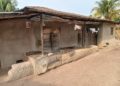
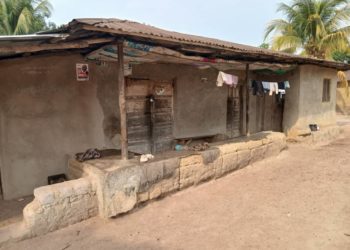
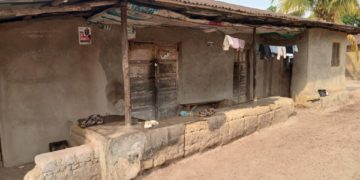
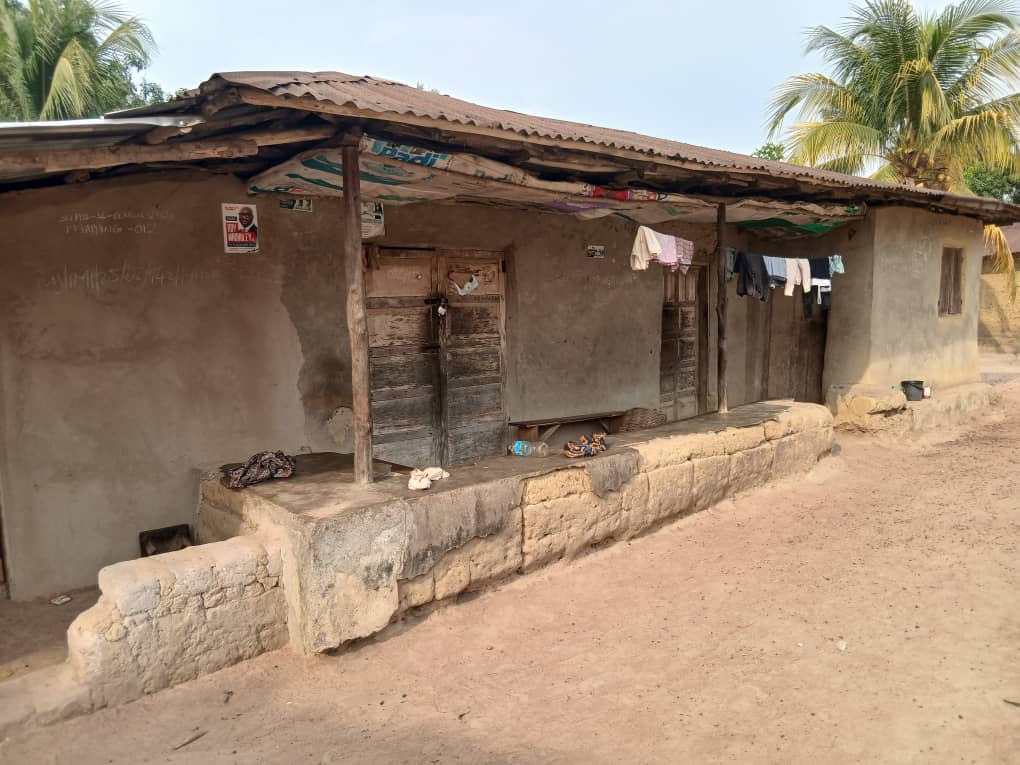
Gombahun is located about seven miles from Pujehun Town, the district headquarters. It was there, in what should have been the safety of her home, that Sundai says she suffered one of the most traumatic experiences of her life.
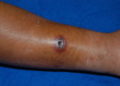
According to her, the attackers—dressed in green half jackets—stormed her residence and business premises, a small local restaurant, vandalizing property and leaving her seriously injured. She says her right arm was fractured during the attack. And nearly three years later, she says she is still battling with internal pain.
Massah further alleges that despite reporting the matter to local authorities, she has not received justice.
“I reported the case to the chiefs in my village and even to the police, but nothing came out of it,” she said. “Up to now, no one has been held responsible.”
Her story is not an isolated one.
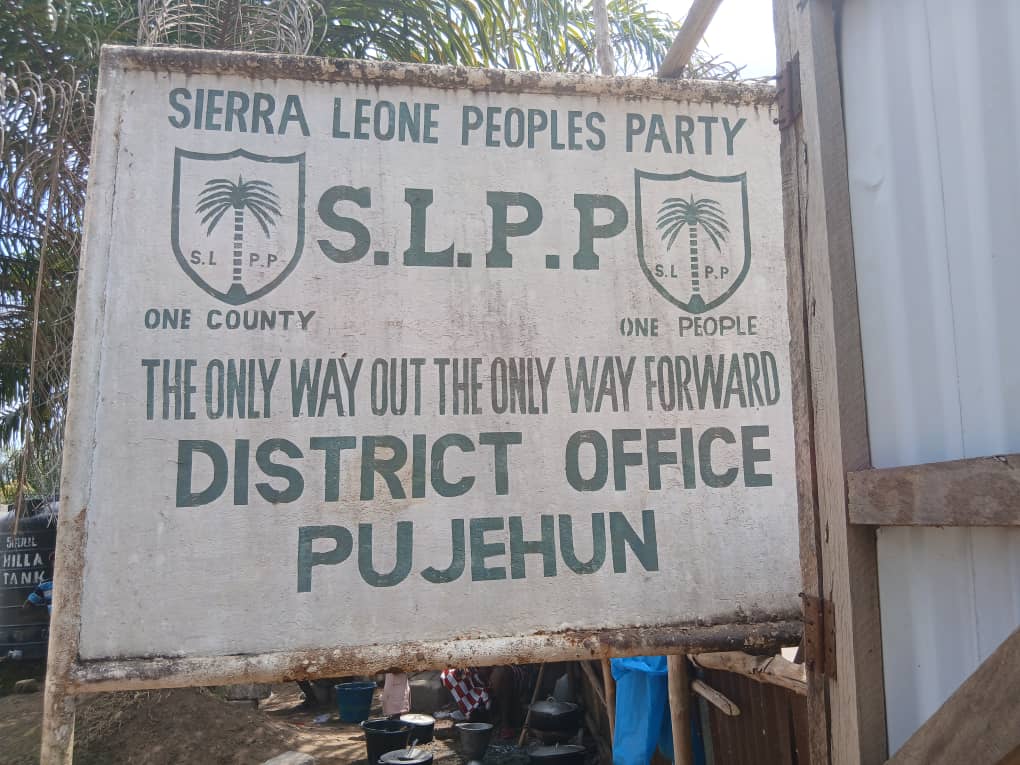
In the same village, another APC supporter, Gbessay Koroma, recounts a similar experience. He says he narrowly escaped an attack by the same group on that same day.
“I had to run for my life,” Koroma said. “If I had stayed, I don’t know if I would be alive today.”
Koroma fled the village and lived in hiding for several months following the elections. Even after returning, he says fear continues to shape his daily life in a community he says is politically dominated by SLPP supporters.
“I still don’t feel safe,” he said. “Anytime there is political tension, we become targets.”
Beyond these individual accounts, there are widespread concerns among Sierra Leoneans across the country about the continued use of thugs or politically affiliated militias by politicians and party candidates, often under the guise of providing personal security or acting as bodyguards.
Many citizens believe that these groups are usually responsible for escalating tensions, intimidation, and violence—especially during election periods. Over the years, civil society groups, community leaders, and ordinary citizens have repeatedly called for a complete ban on such groups, warning that their existence poses a serious threat to peace and democratic stability.
For many, the persistence of these practices raises questions about political accountability and the commitment of political leaders to non-violence.
The concerns are not new
Sierra Leone’s post-war Truth and Reconciliation Commission (TRC), in its final report, warned that the manipulation of young people by political actors and the use of violence for political gain were among the key factors that led to the civil war. The Commission found that unemployed and marginalized youths were often exploited to intimidate opponents and create instability. It cautioned that such practices helped to create a culture of impunity and lawlessness, which ultimately contributed to the conflict.
The TRC further warned that unless deliberate steps are taken to ensure accountability and prevent political actors from sponsoring or tolerating violent groups, the risk of recurrence would remain.
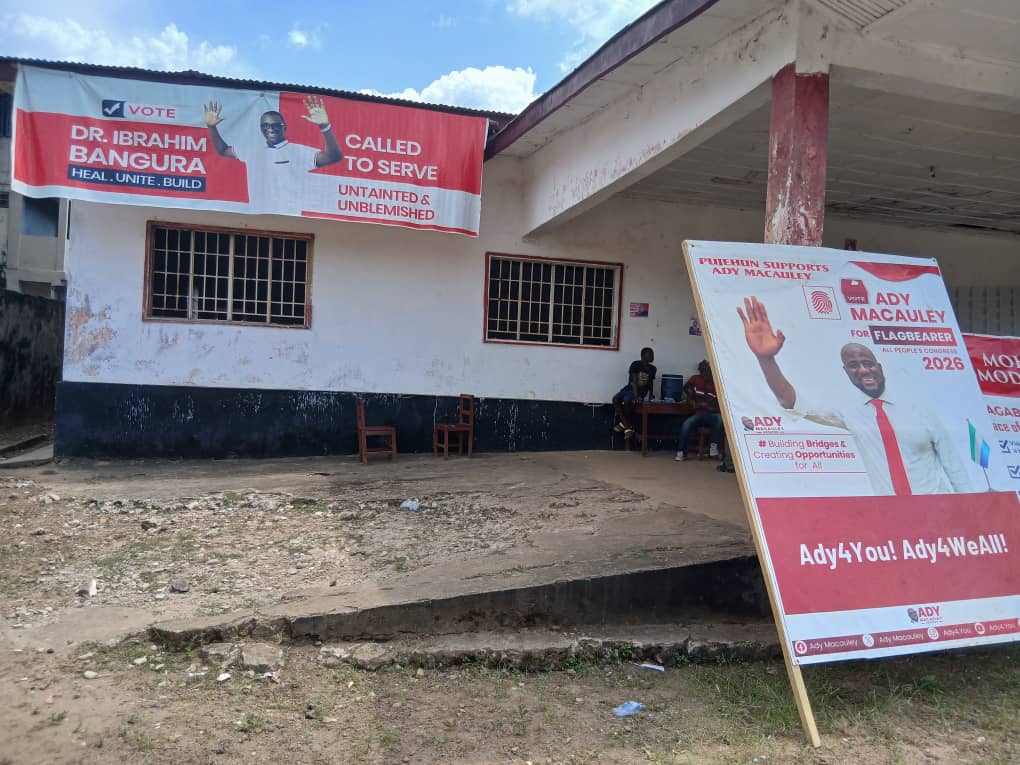
Nearly two decades later, the continued allegations of politically motivated attacks and the existence of militia-like groups raise concerns about whether those lessons have been fully learned. Even political party representatives acknowledge that the problem is real—and longstanding. Both the APC and the SLPP say they welcome Recommendation 33 of the Tripartite Committee, which calls for stronger enforcement against political militias.
The Tripartite Committee is a cross-party body formed in October 2023 following the disputed elections geared towards reviewing the conduct of the elections and to propose electoral reforms. The group brings together representatives of the governing party (SLPP) and the oppositions, and is facilitated by international partners like the African Union, the Economic Community of West African States, and the Commonwealth), with the aim of boosting electoral integrity and national cohesion.
Representatives from the two major parties also admit that the use of thugs or informal security groups has been a major challenge in Sierra Leone’s political landscape, particularly during elections.
Abu Bockarie Mohamed Koroma, District Organising Secretary for Security of the APC in Pujehun, alleged that he too was a victim of political violence during the 2023 elections.
“I and my family, as well as our party office, were attacked,” he said. “Some of our members were seriously beaten by supporters of the SLPP.”
Koroma says that the Political Parties Regulation Commission (PPRC) must take firm action.
“The PPRC should enforce this recommendation and ensure that these groups that terrorise people are stopped completely,” he stated.
However, the SLPP presents a different account. Alpha Munda Kamara, Public Relations Officer of the ruling party in Pujehun, denied allegations that party-affiliated groups were responsible for attacks during the last elections.
“There is no evidence to show that our party marshals attacked anyone in Pujehun during the 2023 elections,” he said.
Kamara noted that concerns about such groups are not new, adding that political actors have long recognised the dangers associated with them.
“For a long time now, there has been agreement on the need to stop recruiting these kinds of groups within political parties,” he explained. “They are dangerous and have caused serious problems across the country, even before the Tripartite Committee made its recommendation.”
The contrasting accounts highlight the complexity of addressing political violence in Sierra Leone, where accusations and counter-accusations often make accountability difficult.
Human rights advocates say the solution must be clear and decisive.
Emmanuel Fawundu, a member of the Human Rights Committee in Pujehun District, described the use of political marshals and thugs as “barbaric and inhumane,” insisting that such groups should have no role in providing security for political parties.
“These groups should not exist in our political system,” he said. “They are dangerous and have contributed to violence and fear among citizens.”
Fawundu called on the PPRC to act swiftly ahead of the next general elections slated for 2028.
“The PPRC must ensure that they stop these groups as quickly as possible,” he said, “Only the state security forces should be responsible for providing protection to politicians and political parties.”
As Sierra Leone approaches its next general elections, the experiences of victims like Mamie Massah Sundai and Gbessay Koroma serve as stark reminders that political militias continue to threaten peace and stability. Despite long-standing warnings from the Truth and Reconciliation Commission and repeated calls from citizens, civil society, and political actors, these groups persist, undermining public trust in democratic institutions.
The PPRC now faces a critical test: to enforce Recommendation 33 decisively, ban all informal political militias, and ensure that only state security forces are entrusted with protection.
Without swift action, the cycle of violence, fear, and impunity risks repeating itself, placing Sierra Leone’s hard-won peace in jeopardy once more.
This report was produced with support from the Africa Transitional Justice Legacy Fund (ATJLF), through the Media Reform Coordinating Group (MRCG), under the project: ‘Engaging the Media and Communities to Change the Narrative on Transitional Justice Issues in Sierra Leone.”