


By Brima Sannoh
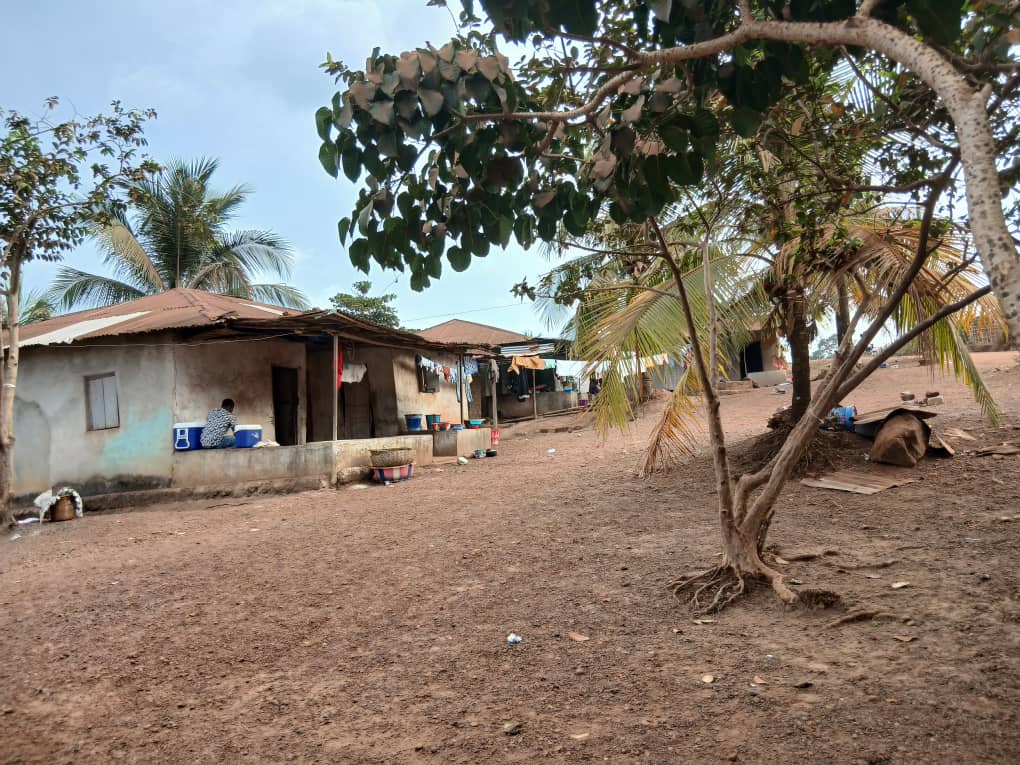
In Vaama Village in the Barri Chiefdom of Pujehun District, 49-year-old widow Juma Foday lives in a poverty-stricken mud house with a leaking roof and cracked walls. The house stands quietly at the edge of the village, surrounded by cassava plantation and tall grasses. But inside, the nights are rarely peaceful.
More than two decades after Sierra Leone’s civil war ended, Juma still wakes up trembling.
“I see the fire again,” she says, her voice barely above a whisper. “I hear the gunshots. I see people running. Even when I wake up, my heart is still beating fast,” she tells ManoReporters.
The war ended in 2002. But for Juma and many others in Pujehun District, the trauma never completely ended.
The War That Lives in Memory
Between 1991 and 2002, Sierra Leone endured one of Africa’s most brutal civil conflicts. Entire communities were displaced. Homes were burned. Children were abducted. Women were widowed. Many witnessed violence too painful to fully recount.
Pujehun District was part the affected regions. Though physical reconstruction has taken place, the psychological scars remain. Juma lost her husband during the war. She fled into the bush with her children, surviving on wild fruits. Today, she farms to survive, but the memories remain vivid.
“Sometimes when I hear loud noise, I feel like I should run,” she says. “Even when there is no danger.”
Her experience is not isolated
Another Survivor’s Burden
In Futa Village, the chiefdom headquarters of Peje Chiefdom in Pujehun District — approximately fourteen miles from Pujehun Town, the district headquarters — 55-year-old farmer Morie Kallon continues to wrestle with memories he cannot escape. As a young man during the conflict, Morie witnessed killings in his village and was forced to carry looted goods by armed fighters who kidnapped him. He survived, but he says something inside him never healed.
“There are days I don’t want to talk to anyone,” he explains to ManoReporters. “If people argue near me, I feel anger rising fast. I don’t like crowds. I prefer to stay alone on my farm.”
He says he often feels guilt for surviving when others did not.
“I ask myself, why am I alive when some of my friends died?”
For Morie, the war is not history — it is a recurring presence.
Clinics Without Counselors
Despite the passage of time, structured mental health and psychosocial services remain limited in rural parts of Sierra Leone.
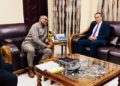
Ruben Rogers, a mental health expert working with the Ministry of Health in Pujehun District, says the situation remains deeply challenging.
“Eliminating mental health issues in this district is not easy,” Rogers explains. “We lack modern facilities and specialist medical doctors who are trained to treat trauma and serious mental illness.”
According to Rogers, hundreds of people across the district continue to suffer from post-traumatic stress disorders and other trauma-related conditions. He notes that the legacy of the civil war, compounded by poverty, hardship, and daily economic struggles, has worsened the psychological burden on many families.
“Trauma does not simply disappear because the war ended,” Rogers adds. “If it is not addressed, it stays in the mind and body. It can affect relationships, parenting, and participation in society.”
However, Rogers acknowledges that the Ministry of Health has made significant progress in managing mental health illnesses and trauma in recent years, particularly through awareness campaigns and integration of mental health services into general healthcare delivery. Still, he stresses, much more investment is needed, especially in rural communities.
“Peace is not just the absence of violence,” he says. “Peace also means emotional stability.”
Civil Society Raises Alarm
Civil society actors say the crisis requires stronger and more coordinated intervention. Swaliho Vargie Koroma, District Focal Person for the Health for All Coalition in Pujehun, believes mental health remains one of the most overlooked aspects of post-war recovery.
In many villages, survivors turn to religious leaders or traditional healers for comfort. While faith and community provide strength, professional psychosocial support remains scarce.
“For years, we focused on rebuilding infrastructure — roads, schools, and clinics — which was necessary,” Koroma says. “But emotional healing did not receive the same level of sustained attention, especially in rural communities.” He notes that poverty, unemployment, and limited access to healthcare continue to compound trauma among survivors.
“When people struggle daily to feed their families, untreated trauma becomes even heavier,” Koroma further explains. “Mental health is not separate from development; it is part of development.”
Koroma calls for increased budgetary allocation for district-level mental health services and greater collaboration between government, civil society organizations, and community leaders.
“We need trained counselors at chiefdom level. We need community awareness to reduce stigma. And we need policy implementation, not just policy documents,” he adds.
Between Strength and Silence
In Konia Village in Barri Chiefdom, local health worker Hawanatu Sannoh says many patients come to her with complaints of persistent body pains and chronic headaches.
“Sometimes they say it is malaria or stress,” she explains. “But when you sit with them and talk longer, you discover the pain is emotional.”
According to Sannoh, stigma surrounding mental health keeps many survivors quiet. Admitting psychological distress is often misunderstood as weakness or even spiritual affliction.
Back in Vaama, Juma Foday continues her daily routine — farming, cooking, caring for her children. From the outside, she appears strong.
But strength and silence often walk together
“When I feel the fear, I don’t tell people,” she says. “They will say I am weak.”
Ruben Rogers warns that untreated trauma can have generational effects.
“When trauma is not treated, it can be transferred indirectly to children — through fear, anger, or emotional distance,” he says. “Healing is not only about the past; it protects the future.”
A Transitional Justice Gap
This situation on trauma in Pujehun reflects a broader unfinished chapter in Sierra Leone’s transitional justice journey.
In its 2004 final report, the post-war Truth and Reconciliation Commission (TRC) of Sierra Leone emphasizes that reconciliation must go beyond political reform. In Volume Two, Chapter 3 (Reconciliation), the Commission stresses that restoring dignity and repairing emotional harm were essential to sustainable peace. It warns that ignoring trauma could weaken national unity and leave communities vulnerable to future instability.
Among the TRC’s key recommendations were the establishment of community-based psychosocial support programmes nationwide,targeted trauma healing interventions for women, children, war victims, and former combatants,integration of mental health services into post-conflict recovery policies, collaboration between government, civil society and traditional leaders to promote long-term healing.
While Sierra Leone made significant progress in disarmament, demobilization, and physical reconstruction, emotional rehabilitation received far less sustained investment — particularly in rural districts like Pujehun.
More than twenty years later, many of the recommendations remain only partially implemented.
Reconciliation Without Healing?
For Juma Foday and Morie Kallon, justice is not only about remembering what happened. It is about finding relief from the memories.
“We survived the war,” Juma says quietly, sitting in front of her modest home in Vaama. “But sometimes, the war is still inside us.”
More than two decades after the guns fell silent in Sierra Leone, roads, schools, and institutions have been rebuilt. Yet in villages like Vaama, Konia, and Futa, reconciliation remains fragile.
When invisible wounds go untreated, peace may exist — but it does not fully heal.
This story was produced by ManoReporters.com with support from the African Transitional Justice Legacy Fund (ATJLF), through the Media Reform Coordinating Group (MRCG-SL), under the project Engaging Media and Communities to Change the Narrative on Transitional Justice Issues in Sierra Leone.