




By Brima Sannoh
At dawn in Kpumbu Village, Malen Chiefdom, the sound of birds once competed only with the rustling of palm fronds and cocoa leaves. Today, it is often interrupted by the harsh whine of chainsaws.
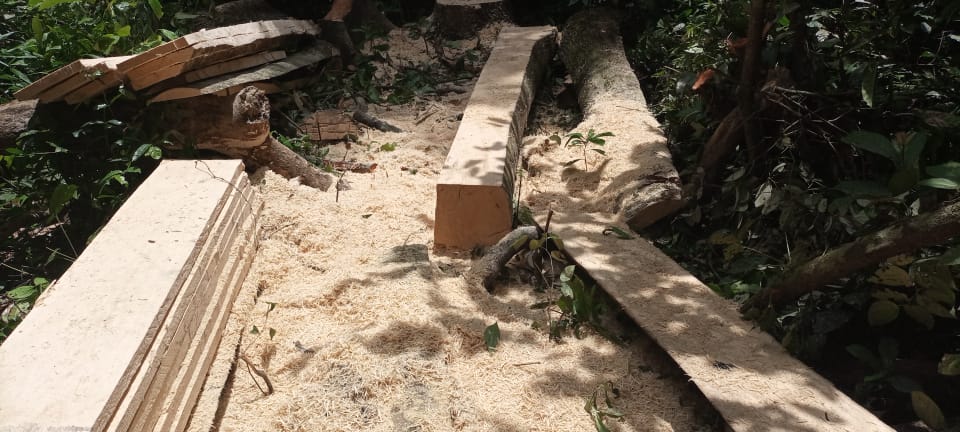
For many residents across Sierra Leone — and in Pujehun District in particular — nature is no longer just a source of life; it is quietly becoming a source of tension. In interviews with ManoReporters, community members in Kpumbu say uncontrolled timber logging has destroyed much of the remaining forest cover in the chiefdom. Tree stumps now dot landscapes that were once thick with vegetation. Elderly members of the community recall a time when sacred groves stood undisturbed and wildlife thrived. Now, vast clearings tell a different story.
For 48-year-old goat farmer Francis Moigua, the effects of deforestation are visible every day. Speaking beside a small pen of noticeably lean animals, he explained how the loss of forest cover has disrupted his livelihood.
“Before now, my goats used to roam freely and find enough leaves and shrubs to feed on,” he said. “Now the forest is almost gone. There is not enough natural feed, and I cannot always afford to buy supplements.”
According to Moigua, the shortage of vegetation has weakened his animals and slowed reproduction rates.
“When the goats are not eating well, they do not reproduce well,” he added. “the animals used to give birth each season. Now the number of animals that give birth has reduced. It is affecting my income and my family.”
Moigua’s concern reflects a broader reality playing out across Sierra Leone — and in Pujehun District in particular — where deforestation is not only an environmental issue but an economic one, affecting farming, livestock rearing, and consequently household survival.
For 52-year-old farmer Mariama Kpaka of Barri Chiefdom, the impact is equally painful. She stood beside a patch of what used to be fertile farmland and pointed to exposed tree roots and dry, cracked soil.
“Before now, this land fed my family,” she said. “Now, after the heavy machines and logging, the soil is weak. My crops do not grow the way they used to.”
But logging is not her only concern. Mariama also spoke about the growing charcoal burning and indiscriminate bush clearing in and around her community.
“People are cutting trees every day to burn charcoal,” she explained. “They clear the bush completely before farming or burning. The land is no longer protected.”
According to her, the combined effect of deforestation, charcoal production, and bush clearing has worsened soil fertility and exposed her farmland to erosion. During heavy rains, topsoil is easily washed away. During the dry season, the land hardens and cracks.
“My rice and cassava do not yield like before,” she added. “Sometimes we harvest so little that we cannot even store food for the lean season. It is affecting my children, our feeding, and our future.”
Mariama explained that declining yields have forced her household to endure longer lean seasons. What used to be predictable harvest cycles are now characterized by uncertainty, leaving families more vulnerable to hardship.
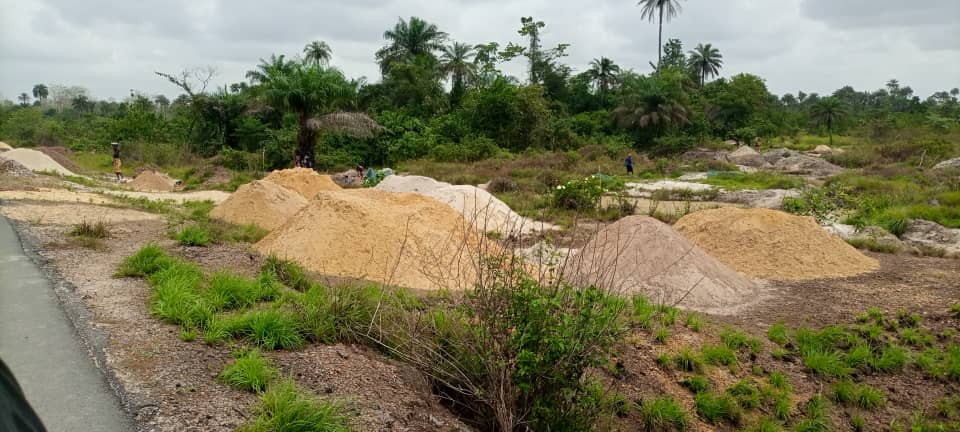
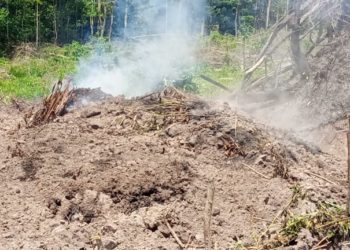
A sand mining field in Bandajuma Village, Sowa Chiefdom, Pujehun District, 28th February, 2026.Image, Brima Sannoh, ManoReporter.
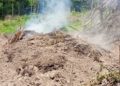
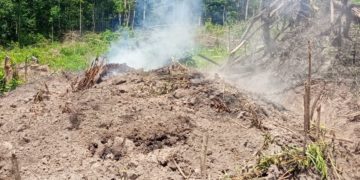
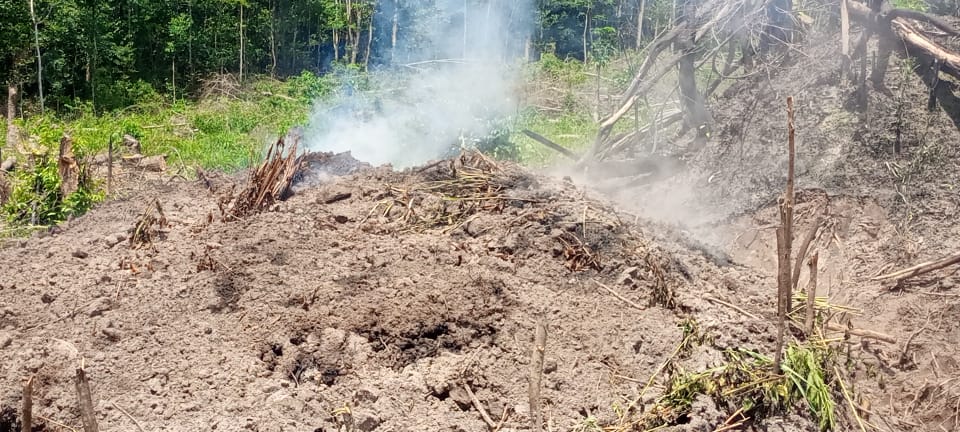
Across Sierra Leone — and especially in Pujehun District — similar stories continue to emerge. In Potoru, the chiefdom headquarters of Barri, residents described massive charcoal production that has significantly depleted forest cover. Thick plumes of smoke often rise above what used to be forested land. Locals say the demand for charcoal has led to aggressive tree felling, leaving hillsides bare and vulnerable to erosion.
In Bandajuma, Sowa Chiefdom, residents reported that sand mining along riverbanks has disrupted fragile ecosystems. Fishermen spoke of murky waters and declining fish catches.
Women who once fetched clean water nearby now travel longer distances as riverbanks collapse and water quality deteriorates.
Youth Frustration and Rising Tensions
For many young people across Sierra Leone — and in Pujehun District in particular — the issue goes beyond environmental damage. It is about fairness and opportunity.
In interviews in Zimmi and surrounding communities, youth groups alleged that local elites and external actors are profiting from natural resources without meaningful consultation or benefit-sharing. They questioned why timber trucks and sand-laden vehicles move freely through their communities while unemployment remains high.
“We see the logs leaving,” said 26-year-old youth activist Mohamed Jusu. “But what stays for us? No jobs, no development projects, nothing.”
Such grievances may seem economic on the surface, but history suggests they can run much deeper.
The final report of Sierra Leone’s Truth and Reconciliation Commission (TRC) warned that unequal access to natural resources, environmental neglect, and economic exclusion were structural drivers of the country’s civil war. Communities that felt marginalized and exploited were more vulnerable to manipulation and violence.
More than two decades after the war, some residents fear that familiar patterns are quietly re-emerging — not only in Pujehun District, but in other parts of the country, where resource governance remains contested.
Government Action and Environmental Enforcement
Authorities point to recent enforcement efforts. The Ministry of Environment and Climate Change, through the Environmental Protection Agency Sierra Leone (EPASL), has taken action against illegal mining activities. Last year alone, the EPA reportedly destroyed nearly 200 heavy dredge mining machines operating illegally along major rivers, and more recently it destroyed additional dredges in continued enforcement operations.
In addition, the government has at various times imposed temporary bans on timber logging and exportation to allow forest regeneration and reduce environmental degradation.
Officials say these measures are intended to protect the country’s remaining forest reserves and promote sustainable resource management across Sierra Leone.
Residents emphasize, however, that enforcement must be consistent and free from selective implementation to restore public trust.
A senior forestry official, Mohamed Pessima, attached to the Pujehun District Council, explained the district’s approach to environmental protection:
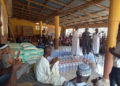
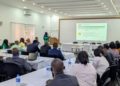
“We cannot protect the environment without community involvement,” he said. “That is why we have been actively engaging communities through public education and sensitization on the importance of protecting the environment. We encourage tree planting and other practical steps that help restore and sustain our forests.
Sustainable practices are essential not only for livelihoods but also for lasting peace.”
The Echo of the Past
The TRC emphasized that peace is not merely the absence of war but the presence of justice — including economic and environmental justice. One of its key transitional justice principles was non-recurrence: ensuring that the root causes of conflict are addressed so they do not return in new forms.
Environmental activist Edward Vandi warned that failing to regulate resource extraction risks undermining that principle.
“When people feel their land is taken without consent, when they see wealth leaving but poverty staying, resentment grows,” she said. “If we ignore these warning signs, we are ignoring lessons from our own history.”
Environmental Justice as Peacebuilding
Civil society groups argue that transparency in land deals, environmental impact assessments, and benefit-sharing mechanisms are not only environmental issues but peacebuilding measures.
“Transitional justice is not just about courts and commissions,” said district-based advocate Abdulai Jalsil Sillah. “It is about changing the systems that caused harm. If resource governance remains opaque and unequal, then we are failing the promise of non-recurrence.”
Experts also warn that climate change compounds the problem. As rainfall patterns shift and soil fertility declines, competition over shrinking resources can intensify existing tensions.
A Call for Transparent Governance
Residents are not calling for a halt to all economic activity. Many recognize the need for development and investment. What they demand is simple: inclusion, fairness, and protection of their environment.
They want community consultations before logging concessions are granted. They want environmental impact assessments to be shared publicly. They want youth employment opportunities linked to resource projects. And they want degraded lands restored.
For Mariama Kpaka, the farmer in Barri Chiefdom, the issue is about legacy.
“We suffered war before,” she said quietly. “We do not want our children to suffer because we failed to protect our land.”
The message emerging from communities across Sierra Leone — and from Pujehun District in particular — is clear: peace is fragile when injustice persists. If the roots of conflict once lay in exclusion and exploitation, then sustainable peace must be rooted in transparency, accountability, and respect for the land.
This story was produced by ManoReporters.com with support from the African Transitional Justice Legacy Fund (ATJLF), through the Media Reform Coordinating Group (MRCG-SL), under the project Engaging Media and Communities to Change the Narrative on Transitional Justice Issues in Sierra Leone.