







By Nana Barima Adu-Twum I
A shifting maritime geography
As geopolitical tensions and logistics crises unsettle the world’s major shipping lanes, the Gulf of Guinea is emerging as a strategic alternative corridor linking Atlantic Africa to global supply chains. Prolonged instability along the Suez Canal, the Panama Canal, and the Strait of Malacca has accelerated the diversion of maritime traffic toward Africa’s western seaboard, transforming the Gulf from a secondary route into a potential new axis of global trade.
Ghana’s resource endowment is usually reckoned in gold, cocoa, bauxite, diamonds, and, more recently, oil. One asset is consistently understated: Maritime Resource Endowment — the strategic dividend a coastal nation earns simply from its position astride global shipping lanes. From Tema to Abidjan and Lagos, the region’s most advanced ports are pairing geography with modernization to court global shipping giants. But that same rise is drawing the attention of transnational organized crime, and with it, security risks that threaten to undermine the very trade the region is trying to attract.
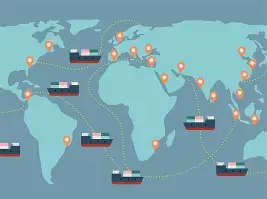
Three factors are driving the Gulf’s ascent as a transit hub: capacity to host next-generation container ships of up to 20,000 TEUs; integrated hinterland access via road, rail, and inland waterway; and strategic connectivity linking national ports to transboundary economic corridors. The next phase of growth will hinge on whether states can move from port economies to corridor economies — knitting logistics, energy, digital, and customs infrastructure into continuous trade ecosystems stretching from inland production zones to maritime gateways. Ghana, Côte d’Ivoire, and Benin, which are aligning urban planning, transport strategy, and industrial clustering, are best placed to lead this transition. The binding constraint, however, is governance coherence: fragmented institutional mandates, overlapping agencies, and uneven security infrastructure continue to slow integration and raise doubts about the region’s capacity to police the illicit trade flowing along the same corridors, much of it moving between the Americas and Europe.
The numbers behind the ‘Busts’
The scale of Ghana’s drug problem is no longer anecdotal. According to Narcotics Control Commission (NACOC) data, seizures rose sharply over just three years: from roughly 8,700 kilograms in 2020, to about 15,500 kilograms in 2021, to a record 59,900 kilograms in 2022 — a cumulative haul exceeding 84,000 kilograms across the period, alongside 100 arrests and 19 convictions. The Commission attributes the 2022 surge to improved intelligence, enhanced collaboration with national and international partners, and the use of advanced detection technology.
More recent cases suggest the volumes moving through Ghana’s ports and highways have grown, not shrunk. In March 2025, security agencies intercepted a tipper truck at Pedu Junction in Cape Coast carrying more than 3.3 tonnes of cocaine hidden beneath sand, a consignment travelling from Takoradi to Accra with an estimated street value exceeding US$350 million — one of the largest single seizures in the country’s history. That same period saw a separate haul of roughly 120 slabs of cocaine, valued at about US$150 million, along the Takoradi-Cape Coast highway. The 3.3-tonne consignment was later destroyed publicly at Bundase Military Camp in June 2025, alongside other narcotics totalling more than 16,800 kilograms.
Independent tallies paint an even starker picture of Ghana’s exposure as a transit point. An investigation covering April 2025 to September 2026 identified eight major transnational drug seizures linked to Ghana over seventeen months, totalling at least 12.7 tonnes of cocaine and suspected cocaine, with cases surfacing not just domestically but, in the Netherlands, Belgium, Australia, and France, and consignments destined for Europe, the United Kingdom, Dubai, and Australia. Among these: a 1.158-tonne cocaine shipment intercepted in December 2025 en- route to the Port of Antwerp; 320 kilograms of methamphetamine seized by Australian authorities in June 2026, traced back to Ghana; and roughly 866 to 869 slabs of suspected cocaine found in Tema in August 2026, bound for London. Just weeks ago, French customs at the Port of Dunkirk intercepted 167 packages containing nearly 3.9 tonnes of cocaine concealed in plastic waste inside a container originating from Ghana, part-destined for Antwerp.
Taken together, three of these flagship cases — the March 2025 Cape Coast seizure, the 2026 Australian methamphetamine bust, and the French cocaine interception carried a combined estimated street value of roughly US$819 million. Opposition politicians have pushed the tally higher still: the Minority in Parliament has cited high-profile seizures linked to Ghana exceeding US$1 billion over the past eighteen months, while the NPP has counted twelve major narcotics-related cases between 2025 and September 2026 with a combined street value above US$1 billion.
These figures are not simply a law-enforcement scoreboard. They are a proxy for exposure of how deeply Ghana’s ports, highways, and export channels have been penetrated by transnational trafficking networks. The pattern suggests foreign cartels are exploiting Ghana’s ports, businesses, and transport networks to move narcotics toward lucrative markets abroad, and that such operations are difficult to sustain without local facilitation. Every container flagged overseas as Ghana-linked narcotics raises the compliance burden on the vast majority of legitimate Ghanaian cargo, threatening exactly the trade advantage the country is trying to build.
Strategic competition: a superpower turf war
The Gulf of Guinea has become a quiet battleground of influence among major powers. China dominates construction and finance, embedding long-term strategic access through concession and debt-linked partnerships. Europe leans on institutional funding and “soft power infrastructure,” notably the EU’s Global Gateway program, which promotes sustainable, transparent port investment. Private terminal operators — Maersk, CMA CGM, Bolloré Ports — supply the operational know-how, technology transfer, and logistics efficiency that increasingly make them gatekeepers of regional trade. This overlap of actors captures the Gulf’s dual character: a logistics hub in the making, and a theatre of geopolitical alignment that demands far closer scrutiny of what is actually moving through it.
Nations receiving cargo from the Gulf of Guinea have begun tightening checks in response to the porous nature of entry and exit points across countries like Ghana. Instability radiating from the Sahel — violent conflict, terrorism, extremism — is pushing weapons and narcotics trafficking toward coastal states, compounding uneven infrastructure quality between them. The region’s core vulnerabilities are structural: limited coordination in customs and regulatory enforcement, and security risks from piracy, trafficking, and Sahel spillover. Turning fragmented initiatives such as the Accra Initiative, the Yaoundé Accord, among others into one coherent maritime-economic vision, backed by regional governance and data-driven decision tools, is no longer optional.
The way forward
The legislative scaffolding already exists. The Ghana Maritime Security Act (Act 833, 2004) establishes the Ghana Maritime Authority to enforce maritime law, coordinate activity, and promote safety across Ghana’s territorial waters and Exclusive Economic Zone, folding the Navy, Marine Police, Fisheries Commission, and Coast Guard into a single command structure to confront piracy, illegal fishing, and smuggling. The National Integrated Maritime Strategy (NIMS), launched in 2023, sets a 2040 horizon for a safe, secure maritime space that underwrites economic growth, social development, and environmental sustainability — spanning fisheries, port operations, offshore oil and gas, tourism, and environmental protection under six strategic objectives, from strengthening governance to deepening regional and international cooperation.
Because these problems cross borders by definition, Ghana’s response cannot end at its own coastline. The country participates in the ECOWAS Integrated Maritime Strategy, aligns with the African Union’s Agenda 2063 Blue Economy Strategy, and sits within the Gulf of Guinea Commission, which coordinates shared-resource management and regional security rules. Globally, it works with the IMO and UNODC, and with the United States through AFRICOM — partnerships that build capacity, transfer technical expertise, and deploy tools like satellite-based vessel tracking. Yet divergent national priorities, governance standards, and budgets across the region continue to blunt cross-border coordination. Strengthening political will and sharing resources equitably remain prerequisites for any lasting fix.
What the region needs most is not another enforcement campaign but a counter-intelligence architecture: integration and information-sharing built on trust, transparency, and accountability among agencies that too often work in silos. Ghana’s port fortunes — and the Gulf of Guinea’s bid to become Africa’s next maritime logistics powerhouse will ultimately turn less on infrastructure spending than on information mastery, risk anticipation, and operational intelligence, backed by the right technology and a properly trained workforce. The billion-dollar headlines are a warning. Whether Ghana treats them as an indictment or as the impetus for the governance reset it has long delayed will determine whether its maritime endowment becomes an asset or a liability.
The author of this article, Nana Barima Adu-Twum I, is the Executive Director of the Centre for Media, Security and Governance Development, Africa based in Accra, Ghana. He can be reached on Tel: 0543062252; Mob: 0548290244; Email: sssadiqadutwum@gmail.com.