





By Kemo Cham
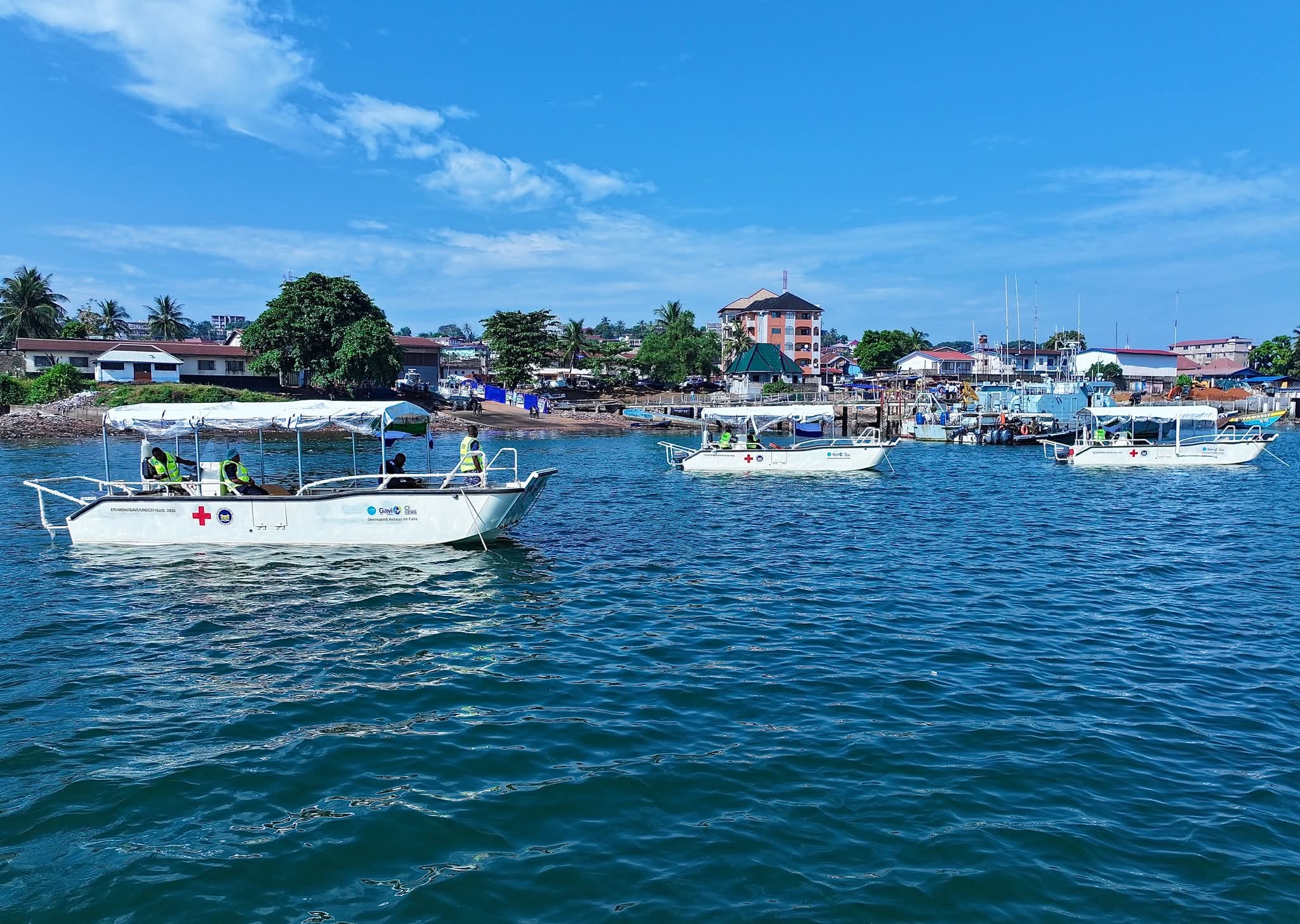
Residents of some of the most hard-to-reach communities in Sierra Leone will now have swift access to healthcare services with the deployment of water ambulances by the government.
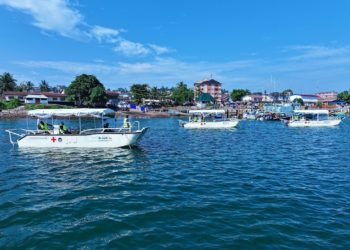
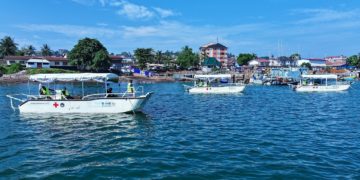
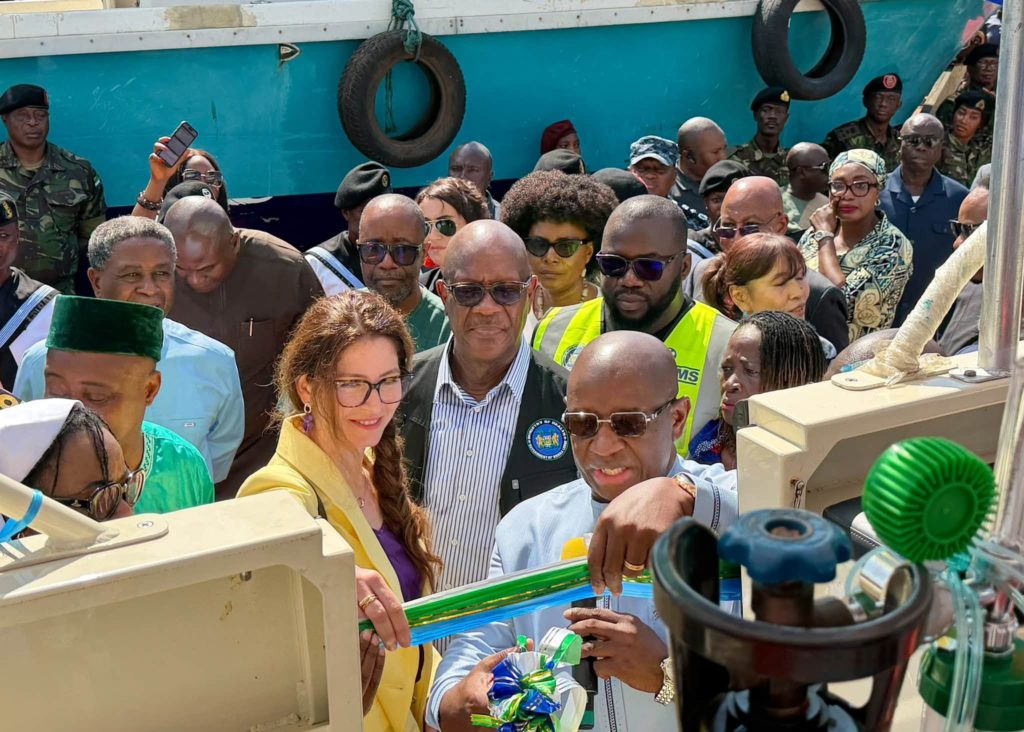
Eight boats, equipped with lifesaving kits, were inaugurated on Friday, November 20th, by President Julius Maada Bio at an event at the headquarters of the Sierra Leone Navy in Freetown.
The boats are expected to strengthen emergency healthcare response by connecting riverine populations to health facilities, thereby improving patient referrals and eliminating geographical barriers to timely access to healthcare services. The Ministry of Health said they will serve communities in seven districts – Bonthe, Pujehun, Kambia, Moyamba, Port Loko, Western Area Rural and Western Area Urban. In many of these targeted communities, access to the rest of the country is only by boat. This means that when people are sick or pregnant women face emergency, they have to wait for long hours for canoes, which are not only risky, but also unreliable due to tidal changes.
“Today is an extraordinary day,” said Health Minister Dr Austin Demby, at the inauguration event.
Officials say the boats, owned by the government, are powered by 85 horsepower engines, and they are fitted with modern communication and satellite systems to support rapid emergency responses and coordination. A total of 24 people were trained to operate the boats. The crew members, certified by the Sierra Leone Navy, are drawn from the communities they serve.
Friday’s event is crucial for Sierra Leone as it strengthens its healthcare system with a particular focus on maternal and child healthcare. Once holding the title of the worse place for a woman to give birth in the world, Sierra Leone has in the last decade made significant progress in efforts to reserve this trend. But challenges like access to healthcare due to difficult terrains serve as threat to this progress.
“One area of the health sector we hadn’t done well in is providing access to healthcare to riverine communities. They still depend on canoe and sometimes it comes too late,” said Minister Demby.
“The boats are equipped with all lifesaving kits, from oxygen to bedside monitors to oximeters; everything we need is inside,” the minister stressed, adding that there are even kits to enable the crew to deliver a baby in an emergency situation.
“This will help us cut down on the delays pregnant women face in riverine communities, and it will help us save the lives of pregnant women, children, suckling mothers and even the community people at large, because once ambulance is available, it can transport them quickly to the facilities for care,” noted Dr Patricia Bah, Chief Nursing and Midwifery Officer.
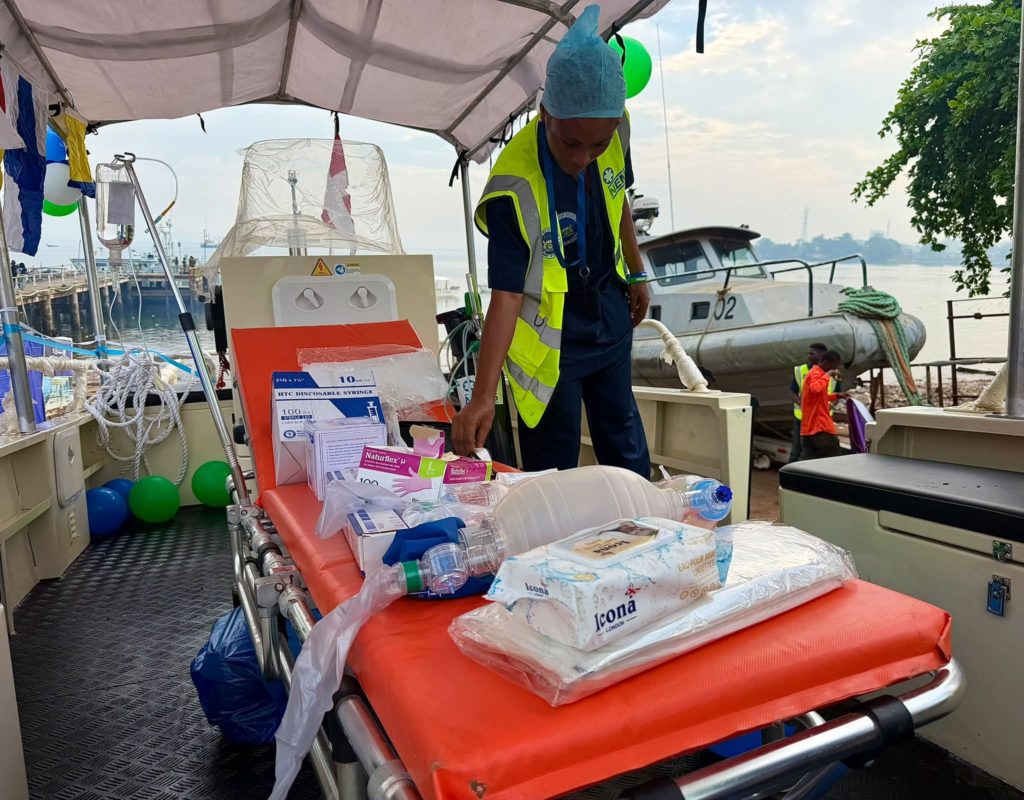
The deployment of the water ambulances also come in handy for the country’s efforts to close the gap in child vaccination. They will be used to deliver vaccines in hard-to-reach communities where there are many zero-dose children.
The water ambulances are an addition to the existing fleet of the National Emergency Medical Services (NEMS), which provides emergency services for free, according to the Health ministry. The boats are integrated with the terrestrial ambulances, said Minister Demby, noting that people can access the services through the national free toll line – 117. He added that the crew will communicate to the nearest hospital ahead about a patient’s imminent arrival.
“Every referral should count,” said Dr Sengor Koedoyoma, Chief Executive Officer of NEMS.
“Every mother must be reached. Every child must be reached. So we have no option but to ensure that we reach them. This is one way we will cover all the riverine communities – the swamps…the riverines, the islands, anywhere there are patients, anywhere human beings are, we must reach there and deliver access to quality care,” he said.