


By Kemo Cham
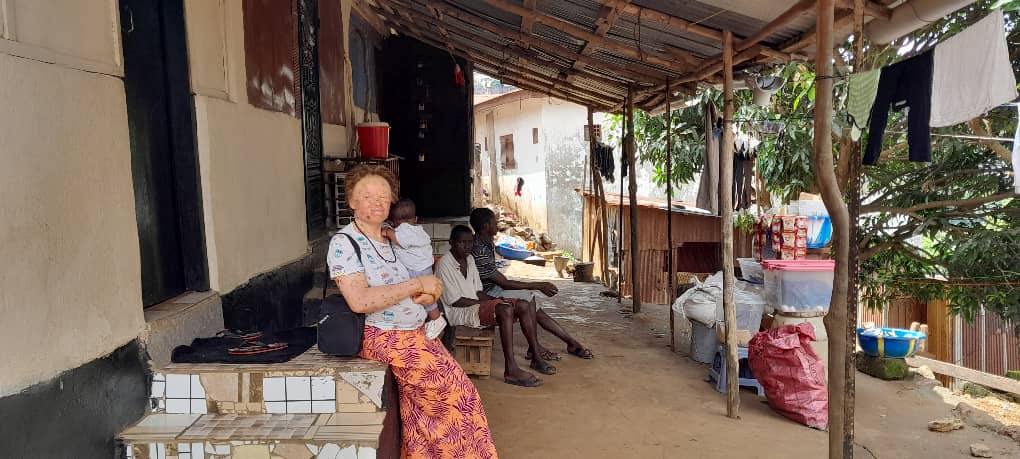
Mariatu Kamara is adjusting to the difficult life of a stay home mum. The 32-year-old mother of one is a person with albinism – a rare, genetic condition where the body produces little or no melanin, the pigment that determines the color of the skin, hair, and eyes.
Mariatu is forced to stay home by a combination of factors. Her skin condition makes her a subject of stigmatization in society, she said, adding that she is also avoiding the sun, which worsens her situation.
Due to the abnormal pigmentation, persons with albinism often have pale or white skin, light-colored eyes, and hair that ranges from white to brown. This abnormal coloration exposes them to huge health implications like permanent issues of vision and sunburns on skin, which can lead to skin cancer. Experts say skin cancer is the biggest threat to persons with albinism.
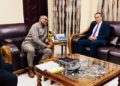
The Sierra Leone Association of Persons With Albinism (SLAPWA), an umbrella organization working for the interest of persons with albinism, says between 2022 and 2025, 10 of its members have died of skin cancer. Mohamed Osman Kamara, Founder and Executive Director of SLAPWA, attributes the fatalities to lack of awareness, which he blames on neglect by the government. One way he said the government has displayed this neglect is by the total exclusion of persons with albinism in the discussion of climate change.
“When you talk about climatic conditions, it is challenging for a person with albinism to live fully, safely,” said Kamara. “We are one of the most affected groups of people.”
SLAPWA was founded to advocate for the interest of persons with albinism. The organization says in addition to the health issues they face, they have to deal with stigma and discrimination, which has limited their chances of success in life. These unfair societal treatments are fueled by myths and misconceptions about who persons of albinism are.
“It entails a lot for someone to live with Albinism in Sierra Leone and be successful in life, because the barriers and myths that surround the condition and marginalisation and exclusion are enormous and limit growth,” said Kamara.
“When you talk to government officials, like the social welfare ministry, the commission for disability, etc., they tell you that the resources they have are not enough to take care of their mandate. Apparently they don’t recognise albinos,” he said.
Thanks to partners like Medical Assistance Sierra Leone in the UK, SLAPWA provides sunscreen and other protective gears to individuals for free. These support also enable the organization to convene regular meetings with people with albinism where they engage in peer discussion on protective mechanisms, share sunscreen and conduct skin cancer screening. Over 800 people nationwide have registered with the organization and are benefitting from their supplies. Ousman says the number of people with Albinism is likely to be higher but that a study is needed for that.
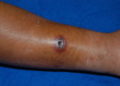
Much of Mariatu’s skin is covered by dark spots, which often develop on sun-exposed areas of a person with albinism. These spots, when they become bigger without treatment, can lead to cancer. Thanks to SLAPWA, Mariatu has undergone surgery twice on a spot under her left hand. The organization paid for the surgery with the help of donor funding. Kamara laments the cost involved, citing the failure of the government to fulfil its promises in the Disability Act of 2011. This piece of legislation provides for free healthcare for persons with disability, like persons with albinism. Many rights campaigners say the law has not been implemented fully. And the government itself has admitted to this, citing limited available resources.
“We don’t have the facilities and devices persons with albinism need, but we have partners who help provide these services,” said John Conteh, Acting Director of Social Welfare in the Ministry of Social Welfare.
A 2023 publication of the Journal of Climate and Health, titled: ‘Global impact of climate change on persons with disability: A human rights issue,’ described the urgency for addressing the health challenges for persons with albinism impacted by the climate change crisis as a global human rights issue. The authors found that besides vision problems, the skin of persons with albinism is vulnerable to damage due to Ultraviolet (UV) radiation from the sun and so they do not tan and can easily be sunburned. They may also develop blisters, solar elastosis, actinic keratosis, consequently placing them at a constant risk of developing skin cancer due to UV sun exposure. The report notes.
“It is recommended that PWA use sunscreen of at least a Sun Protection Factor (SPF) of 50 and wear long-sleeved clothes and hats,” the authors wrote.
Persons with albinism are reported to have a lower life expectancy due to skin cancer, with many reportedly dying before their 40th birthdays. This is attributed to lack of proper medical attention, and limited income opportunities including needing to work long hours outdoors while exposed to the sun.
In Sierra Leone, lack of awareness means many persons with albinism are exposed to these life threatening risks, until it is too late. Growing up in the east end of Freetown, Mariatu was hawking household materials in the streets as a source of income from her foster family. She recalled she was dressing anyhow, without protection from the sun. At around 25 years, she started developing black spots on her skin. But she was told that the spots were caused by the food she was eating.
It was when she got in contact with SLAPWA years later that Mariatu learnt that her condition was caused by her exposure to the sun. But over a decade of exposure had already had a toll on her. Still, she had to make ends meet, therefore the hawking business continued. In April 2025, she underwent her first surgery. Eleven months later, in March 2026, a second procedure was conducted on the same spot.
Mariatu soon realized that she had to balance her health and her financial needs.
“I would rather have good health sitting at home with my meager income, than having to constantly deal with health complications with riches,” she told ManoReporters.
Mariatu’s husband moved her from his family home in the east end of Freetown to IMAT in the west end, partly to avoid family pressure over their relationship. But their current location, almost surrounded by trees, also fittingly provides much needed protection from the sun almost all day. She hardly goes out. And if she must, it is usually in the early morning hours.
“By the time the sun rises, I am back at home,” she says.
But not many people are as lucky as Mariatu, said Kamara, the SLAPWA Executive Director. He said many people in remote and deprived parts of the country have to work under the hot sun for protracted periods to make a living, like those involved in farming.
“Some people in the village have to work in the farm under a hut sun. They have no idea about the effect. Some people have blisters and they call it the result of witch gun (black magic),” said Kamara. He cited a female colleague of theirs who recently lost her life after refusing to accept that she had skin cancer, until it’s late.
According to the United Nations Human Rights Office, neglect of persons with albinism is a global phenomenon. The global body’s expert on albinism in its latest report on the matter published in October 2023 highlights that Climate change is having a dangerous impact on people with albinism worldwide, contributing to high rates of skin cancer deaths in some regions, especially in Africa.
“The profound impact of climate change on persons with albinism is one of the most overlooked aspects of the issue,” said Muluka-Anne Miti-Drummond, the Independent Expert on albinism.
“In Africa alone, it is estimated that persons with albinism are up to 1000 times more likely to develop skin cancer than those without, with many dying by the age of 40.”
The report addresses a number of human rights-related challenges of climate change on persons with albinism, including in the context of discrimination based on colour and disability, the right to the enjoyment of the highest attainable standard of health, the right to education, the right to employment and the right to life.
“Climate change could impinge on the full enjoyment of those rights and have a disproportionate impact on persons with albinism,” the report notes.
The report also offers good practice and recommendations geared towards addressing the challenges related to climate change, including further in-depth studies and analysis on its impact.
Dr John Mbeteh, Dermatologist working with SLAPWA, leads its nationwide screening process. He advises them on dos and donts to avoid skin cancer.
Dr Mbeteh said he always advises them to wear sunscreen, put on long sleeves and wear hats when stepping outdoors. But he said many don’t adhere to that advice, which is why they advise them to stay away from the sun.
“We have peak periods between 10am and 4pm. We encourage them to avoid the sun,” he said.