







By Kemo Cham
A string of global narcotics interceptions recently has led to the seizure of tens of tonnes of illegal drugs, reflecting intensified and sophisticated multi-agency operations across Atlantic, Caribbean, and African trafficking routes.
A huge part of these interceptions involved the Gulf of Guinea, which has emerged as a primary transshipment hub for South American cocaine destined for Europe. This has put Sierra Leone’s maritime security readiness to test, as several of the illegal drugs have been traced back to the country.
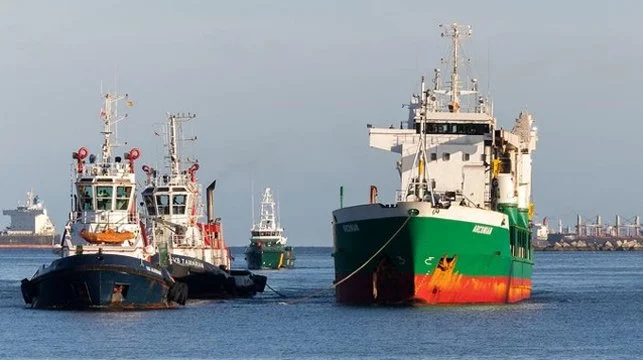
Various reports have cited international investigators alleging that Sierra Leone has increasingly become an important transshipment point for Latin American Cocaine destined for European markets. The latest such incident occurred early this month when a vessel was reportedly intercepted by Spanish authorities allegedly carrying 30 tonnes of cocaine. The vessel named MV Arconian allegedly departed from the Freetown Port and was headed for Libya. Other reports suggested it was previously named Nur Zeynep and flew the Sierra Leonean flag.
The Spain Government has since mounted an investigation into the incident. While those concerned await the outcome of that investigation, concerns are growing about Sierra Leone’s maritime security and the government’s willingness or capabilities to protect it.
Sierra Leoneans from all spectrums of society have called for a soul searching moment over the issue. An important voice among these recently is opposition politician Abdul Kargbo, lawmaker and member of the main opposition All People’s Congress (APC). Kargbo is the leader of the opposition in the House of Parliament. In a widely publicised open letter addressed to the President, Kargbo, among a wide range of concerns, warned of the possible infiltration of transnational crime syndicates into Sierra Leone’s maritime corridors.
The highly vocal lawmaker noted that repeated reports linking Sierra Leone to international narcotics trafficking and organized criminal networks hasn’t received adequate response from the government, which he considers unsettling.
“The frequency and gravity of these reports now pose a serious threat to our national image, diplomatic standing, internal security, and future economic prospects,” Hon Kargbo said.
The MV Arconian incident exposes a more worrisome security concern. Spanish Interior Minister Fernando Grande-Marlaska, during a press briefing on the incident, disclosed that security forces discovered a hidden arsenal on board the vessel. Also, armed men were on board assigned to protect the hidden prohibited consignment. And for Kargbo, this exposes potentially dangerous weaknesses within Sierra Leone’s maritime surveillance, port inspection systems, intelligence gathering capabilities, and border security architecture.
“The presence of such sophisticated weaponry aboard a vessel that had recently departed Freetown raises grave national security concerns for Sierra Leone,” the lawmaker said in his letter dated May 10th.
Maritime security concerns in Sierra Leone are not new, and it goes beyond drug trafficking. It also touches on Illegal, Unreported, and Unregulated (IUU) Fishing, thereby threatening a major economic lifeline for the country.
The inability of Sierra Leone to deal with this situation manifests in regulatory vulnerabilities within the Port of Freetown. This also means that the country’s capacity to monitor its vast territorial waters is historically constrained by limited patrol assets and infrastructure. Consequently, foreign-owned commercial trawlers, often operating at night, frequently encroach on restricted zones, severely depleting fish stocks and depriving local artisanal fishermen of their livelihoods.
But it seems for some Sierra Leoneans, the impact of these deficiencies on the international narcotics network is of a bigger concern. Already, the country has been dealing with the embarrassing situation of a fugitive Dutch Kingpin allegedly living in the country under the protection of the state. Jos Leijdekkers, also known as Bolle Jos, was sentenced to a 24-year prison term in the Netherlands and additional sentences in Belgium for roles in major drug trafficking in Europe. The Bio Administration has repeatedly denied his presence in the country.
Habib Kamara, Executive Director for Social Linkages for Youth Development and Child Link (SLYDCL), a local civil society organization working with vulnerable young people and People Who Use Drugs (PWUDs), said the development reiterate calls for a major policy shift to counter the criminal networks, including investment maritime security.
“This seizure highlights the urgent need for stronger port and maritime surveillance systems, enhanced anti-corruption measures and improved intelligence and cross-border cooperation,” he said.