




By Kemo Cham
In the fight against crime, collaboration is crucial for success. It becomes even more pertinent when the crime is conducted offshore and by forces that have become emboldened by state of the earth technologies increasingly available to them.
Obangame Express is one such collaboration governments across western and central African have counted on to meet the ever demanding challenge at sea. One of the largest annual multinational maritime security exercise in Western and Central Africa, Obangame Express is
sponsored by the U.S. Africa Command (AFRICOM) and facilitated by the U.S. Sixth Fleet. It brings together dozens of nations from Africa, Europe, and North America, with the goal of enhancing collective maritime law enforcement capabilities and bolster regional security in the Gulf of Guinea.
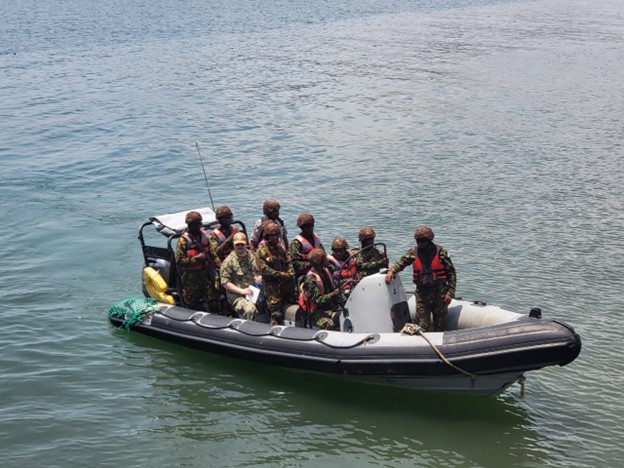
The two-week long exercise works through multinational cooperation and maritime domain awareness. Participants engage in practical, real-world scenarios at sea, including military maneuvers involving legal experts, police, and judges. The ultimate goal is to empower regional forces to combat piracy, human trafficking, illegal and unregulated fishing (IUU), and illicit drug smuggling.
Obangame Express 2025, the 14th edition since it was launched, concluded on May 16th, 2025 with renewed hope for collaboration towards a safer maritime sector.
According to AFRICOM, the event brought together 32 nations, 22 of them from West and Central Africa. The archipelago of Cape Verde hosted it, providing strategic infrastructure such as its Security Maritime Operations Center (COSM) to coordinate multinational responses across the participating nations. This year’s exercise focused on enhancing regional coordination, expanding maritime awareness, and enhancing operational readiness. The participating nations worked side-by-side to address shared maritime threats and refine command-and-control procedures across the region’s strategic waters. It involved more than 30 ships, multiple aircrafts, and 21 maritime operations centers carrying out scenarios such as piracy interdiction, illegal fishing enforcement, oil platform protection, and maritime search-and-rescue.
“Obangame Express demonstrates the strength of regional cooperation by promoting stability and security across the Gulf of Guinea,” Robert Scott, Deputy to the Commander for Civil-Military Engagements, US Africa Command, is quoted.
“The collaboration, professionalism and mutual respect displayed throughout this exercise are a testament to what we can achieve together, he added, noting that the U.S. Africa Command remains proud to support these efforts, strengthening regional stability and promoting a more secure and prosperous coastline for all.
Among the other countries that participated are two of Sierra Leone’s Mano River Union neighbors: Cote d’Ivoire and Liberia.
“The number of countries participating is a testament to the strength of our shared commitment to regional peace and security,” said U.S. Ambassador to the Republic of Cabo Verde Jennifer Adams.
For the US, Obangame Express supports its national security objectives by encouraging regional self-reliance and limiting the need for outside intervention, said Africom. It noted that participating nations help safeguard one of the world’s most critical maritime corridors, where more than 90 percent of Africa’s trade transits and global shipping relies on stable waters.
“Criminal networks engaged in piracy, trafficking, and illegal fishing threaten both regional economies and international commerce,” it stressed.
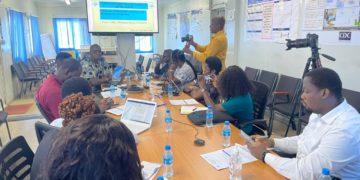
According to a news release from the US Embassy in Freetown, two representatives of the US Navy were embedded within the Sierra Leone Navy as part of the exercise. It said that a key focus of the training was the Yaoundé Code of Conduct (YCoC), a regional maritime security agreement established in June 2013 by 25 West and Central African nations to combat piracy, armed robbery, and illicit maritime activities in the Gulf of Guinea. Through this framework, member states work towards promoting maritime coordination and collaboration throughout West and Central Africa.
The YCoC crucially aims to manage and significantly reduce the adverse effects of maritime crimes by fostering trust and information-sharing among signatory nations.
As in the other participating nations, during the Freetown exercise, participants used the SeaVision, a maritime situational awareness tool developed by the U.S. Department of Transportation’s Volpe Center in collaboration with U.S. Naval Forces Africa. This, according to the news release, facilitated the sharing of maritime information and intelligence across the five zones of the Yaoundé Code, enhancing operational capabilities and enabling the detection of vessels not transmitting on Automatic Identification System.
Other areas of focus for the Sierra Leone exercise included operational activities like maritime interdiction scenarios and information-sharing exercises.
“This collaboration underscored the United States’ dedication to building enduring relationships and combined capacity to ensure the safety and security of maritime environments in Sierra Leone and across the region,” said the US Embassy in its statement.