




By Kemo Cham
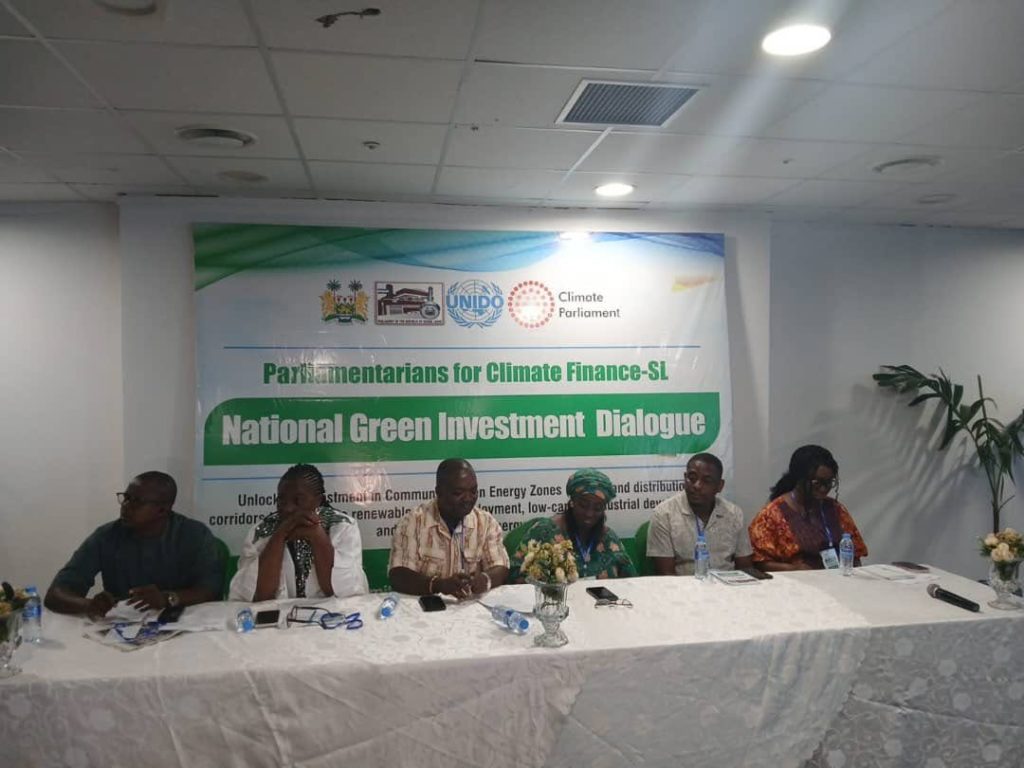
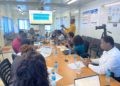
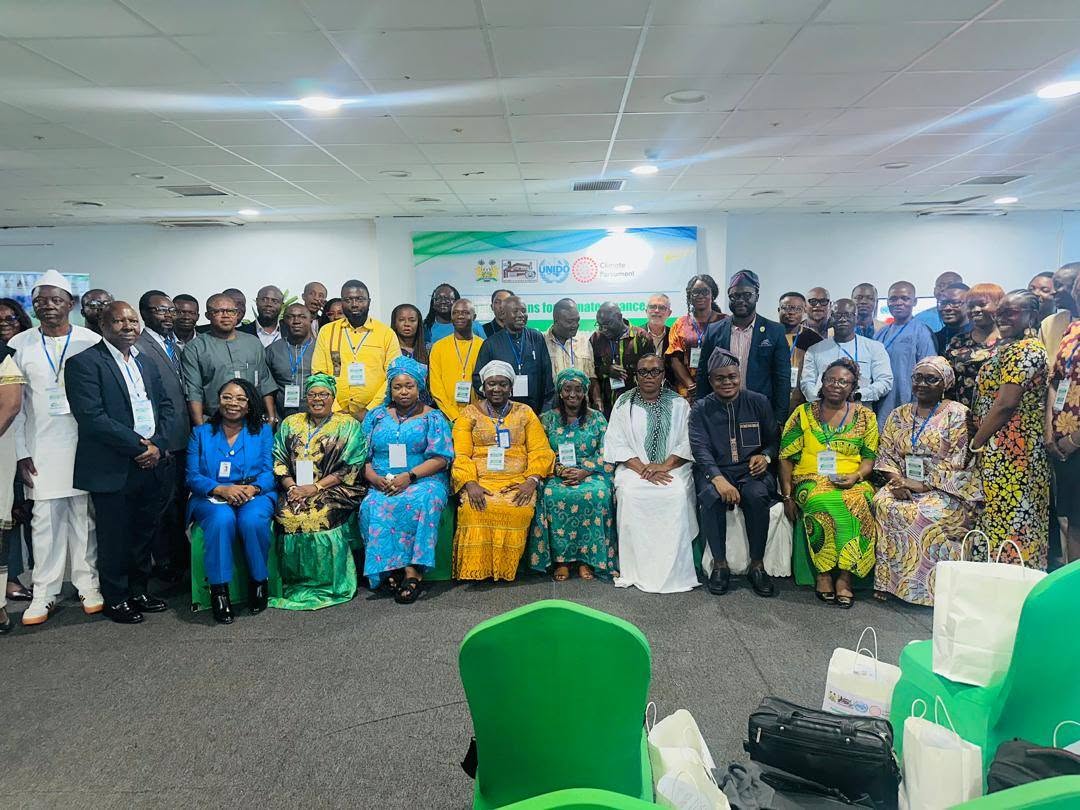
The Sierra Leone government’s desire to transform the country to a leader in green investment and climate resilience got a major boost at the political front on Friday with the convening of a National Green Investment Dialogue. The event is part of a high-level initiative by Parliamentarians for Climate Finance, a group of lawmakers dedicated to championing private and public capital for sustainable, community-focused climate projects.
Friday’s event brought together lawmakers, representatives from relevant government institutions, development partners, climate experts, investors, civil society groups, and private sector stakeholders to discuss climate finance, renewable energy, and sustainable development. It was held under the theme: “Unlocking Investment in Community Green Energy Zones (CGEZs) and Distribution Corridors to Accelerate Renewable Energy Deployment, Low-Carbon Industrial Development, and Community-Led Energy Access.”
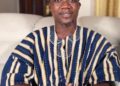
Yusuf Mackery, Member of Parliament and Chairman of the Parliamentary Committee on Environment and Climate Change, said the meeting represented a critical step toward positioningSierra Leone as a leader in green investment and climate resilience. He warned that climate change is no longer a distant threat but a reality already affecting farmers, fisher folks, inhabitants of coastal communities, and other vulnerable communities across the country.
The Parliamentarians for Climate Finance is an international, cross-party network of legislators formed to mobilize climate finance with the goal of accelerating the global transition to renewable energy. The initiative is led by the Climate Parliament and the United Nations Industrial Development Organization (UNIDO), with the backing of the Green Climate Fund (GCF). It seeks to empower lawmakers to shape national budgets, create favorable regulatory frameworks for green investments, and hold governments accountable for climate-related commitments.
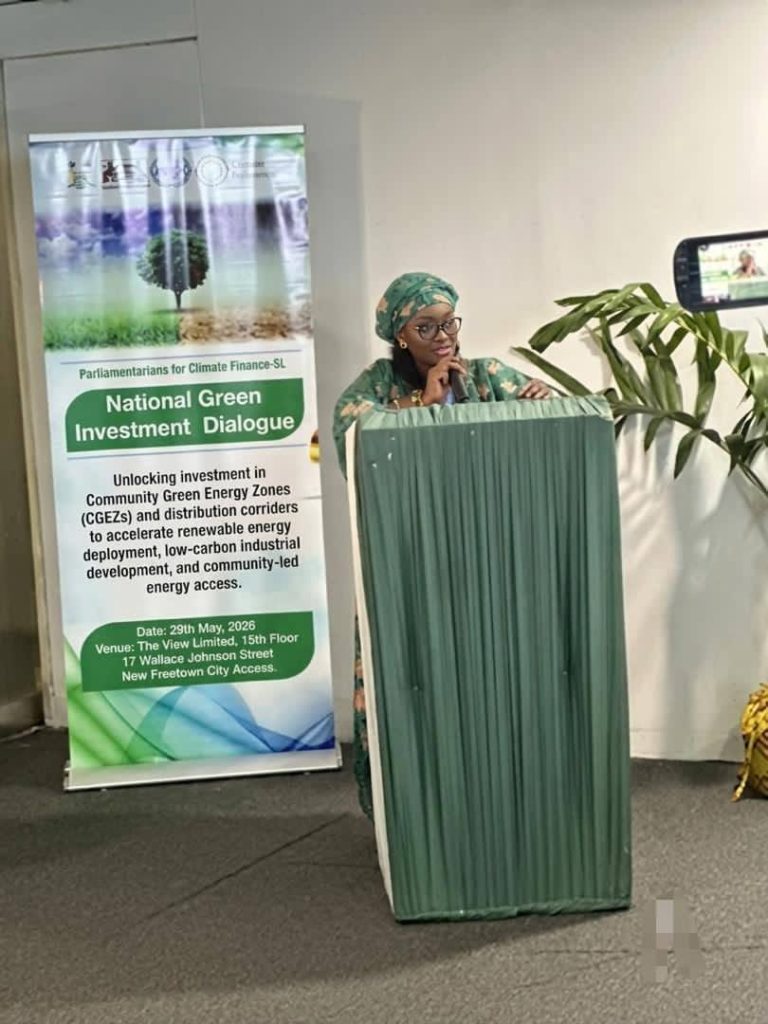
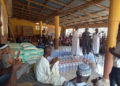
At Friday’s event hosted within the main hall of the Freetown City Council, government officials and experts alike emphasized the need for Sierra Leone to move beyond being seen only as a climate-vulnerable nation and become a country prepared to lead through innovation and partnerships. Hon. Mackery highlighted the importance of creating bankable green investment opportunities aligned with the country’s National Development Plan and its Nationally Determined Contributions (NDC 3.0).
Mimi Yema Sobba-Stephens, Deputy Minister of Environment and Climate Change, said the government was committed to building a climate-resilient, environmentally sustainable, and low-carbon economy. She highlighted key national priorities of the administration, including ecosystem restoration, renewable energy expansion, climate-resilient infrastructure, sustainable waste management, and increased climate financing.
Ms Sobba-Stephens emphasized on the importance of stronger partnerships between government, private investors, development partners, and local communities in efforts to drive green transition.
“The private sector must be recognized not simply as a stakeholder, but as a strategic partner in national transformation,” she said.
“Our role as government is to create the enabling environment through sound policies, regulatory certainty, institutional coordination, investment incentives, and transparent governance systems that reduce investment risks and encourage long-term confidence”, she added.
The Sierra Leone government’s strategic vision on green transition, among others, seeks to build a climate-resilient, environmentally sustainable, and low-carbon economy that delivers inclusive growth and long-term prosperity. It notes that this vision is anchored in the national climate commitments, including the NDCs and its Medium-Term National Development Framework.
Loveta Junnah, a representative of the Executive Chairman of the Environmental Protection Agency (EPA), spoke on the importance of climate finance in supporting mitigation and adaptation efforts, noting that green investments are essential for promoting environmentally sustainable development and accelerating renewable energy access.
Low and middle income countries like Sierra Leone which are at the receiving end of the impact of climate change have criticized the global climate financing regime for being inadequate, bureaucratic and unjust, arguing that international funds do not match the scale of the countries’ vulnerability, heavily burdens the states with loans rather than grants, and excluding such nations from the decision making on market mechanisms like carbon credits.
But at home, these countries have themselves also come under scrutiny over their commitment to fulfilling their own promises on environmental protection.
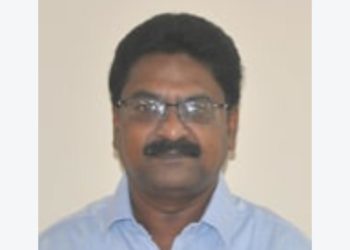
Dr. Emmanuel Marfo, the West Africa Director for Climate Parliament, highlighted the “crucial” role of parliamentarians in addressing these issues through legislation, oversight, and accountability. He stressed that lawmakers serve as bridge between global climate discussions and the realities faced by local communities.
Achieving Sierra Leone’s climate ambitions would require stronger collaboration between policymakers, parliamentarians, investors, financial institutions, and development partners, added Mariatu Swaray, Country Director for UNIDO.
The Ministry of Finance is a critical element in all this. And at Friday’s event, Sellu Mackie from the Environment Desk in the Ministry, announced that the government was introducing Climate Expenditure Tagging within the national budget process. According to him, this initiative will help track government spending on climate-related activities, improve transparency, and prevent duplication of climate funding.
Abdul Karim Kamara, the opposition Whip in Parliament, called for stronger monitoring of climate funds and development projects, warning that some organizations misuse climate-related resources without delivering meaningful impact to communities. He urged colleage parliamentarians to rise above political divisions and work collectively to protect the environment.