






Brima Sannoh
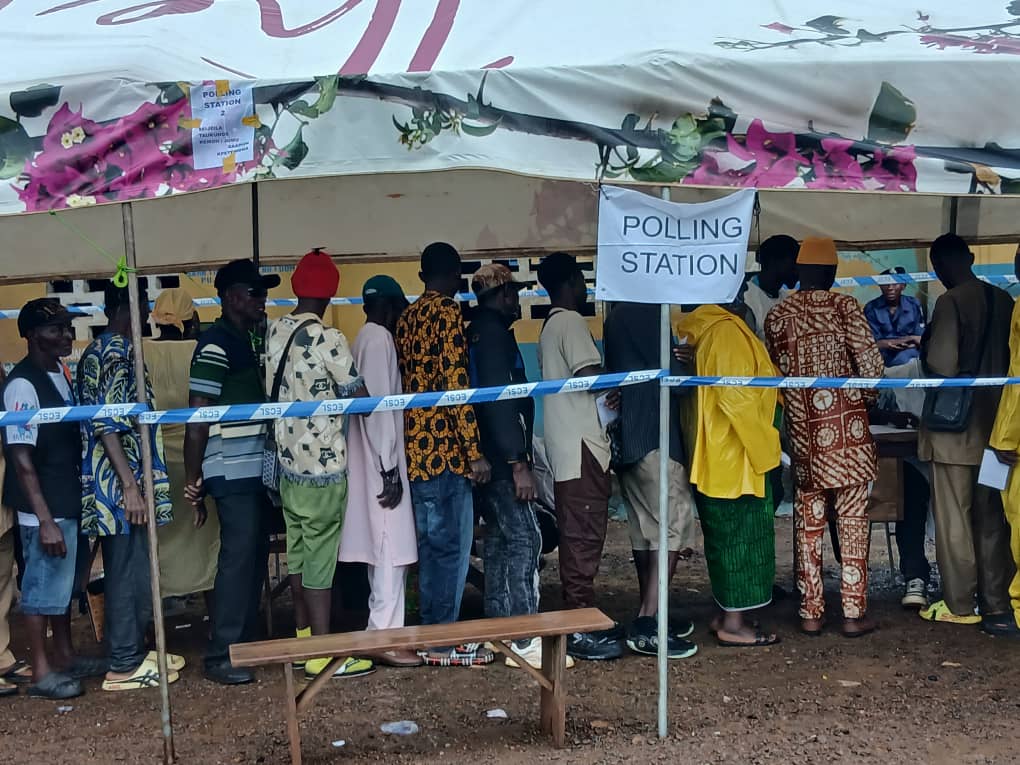
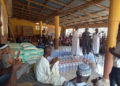
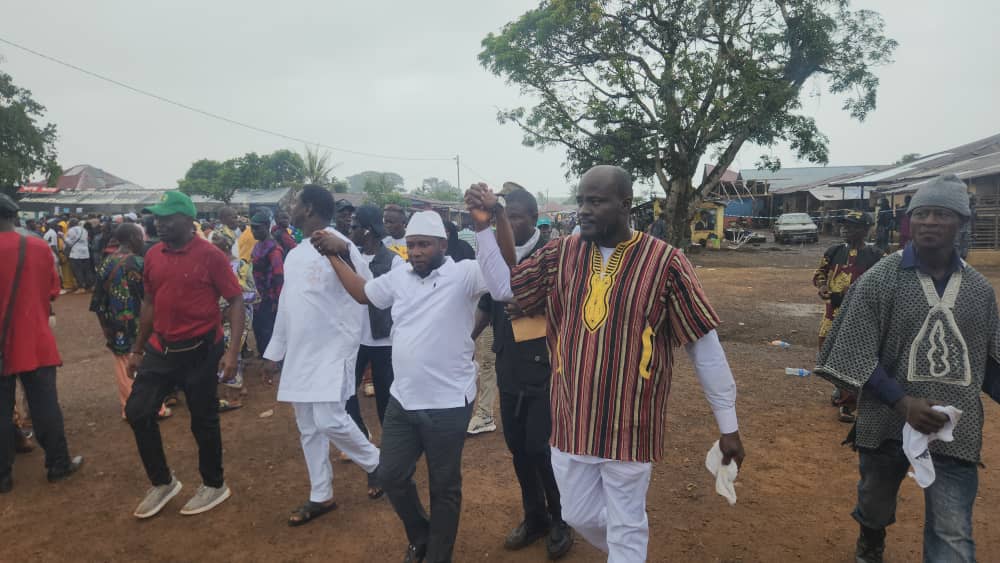
Long before dawn broke over Sahn on Sunday, June 14, streams of people had already begun converging on the chiefdom headquarters. Traditional Authorities dressed in their finest attire, community elders, youth groups, women, government officials, civil society representatives and ordinary citizens gathered for what many described as one of the most consequential moments in Malen Chiefdom’s modern history.
The atmosphere was charged with anticipation but anchored in hope. Hundreds of security personnel maintained a visible presence throughout the town, while thousands of indigenes and well-wishers from across Sierra Leone assembled to witness the election that would determine the next custodian of one of the country’s most influential traditional institutions.
By Sunset, History Had Been Made
Maada Joe Kpunyeh Kebbie, the eldest son of the late Paramount Chief Brima Victor Siddie Kebbie, emerged victorious after a decisive runoff election, extending the Kebbie family’s hold on the leadership of Malen Chiefdom to well over a century. His victory was more than a personal triumph. For many in Malen, it represented the continuation of a long-standing traditional legacy while simultaneously demonstrating that even highly competitive traditional elections can be conducted peacefully, transparently and credibly.
Why the Election Captured National Attention
The Malen Paramount Chieftaincy election attracted nationwide attention not only because of the importance of the chiefdom, but also because of the calibre of personalities who sought to lead it. For many supporters of Maada Joe Kpunyeh Kebbie, the election represented the continuation of a respected traditional legacy. As the eldest son of the late former Paramount Chief, he carried the name of one of Malen’s most influential traditional rulers. During the late Paramount Chief’s reign, the establishment of the Socfin Agricultural Company brought significant economic activity to the chiefdom. While opinions on the company’s broader impact have differed over the years, many residents credit that period with creating employment opportunities and easing economic hardship for numerous families.
Kebbie’s principal challenger, Honourable Shiaka Musa Sama Kai-Magbie, entered the race with a formidable political base. As the incumbent Member of Parliament, he has cultivated strong grassroots support across the chiefdom, with many residents viewing him as a committed advocate for their interests. His campaign reflected years of political engagement and reinforced his standing as one of the most influential political figures in Malen.
The election also unfolded against the backdrop of broader political dynamics. Supporters have associated Sama with the Ebema Movement, while the Sengeh Ruling House—whose prominent members include the Chief Minister, Dr David Moinina Sengeh—has been associated by supporters with the Radical Inclusion Movement (RIM). Although the contest was fundamentally a traditional election, these perceived political alignments heightened public interest and contributed to the extraordinary national attention the race received.
A Closely Contested Race
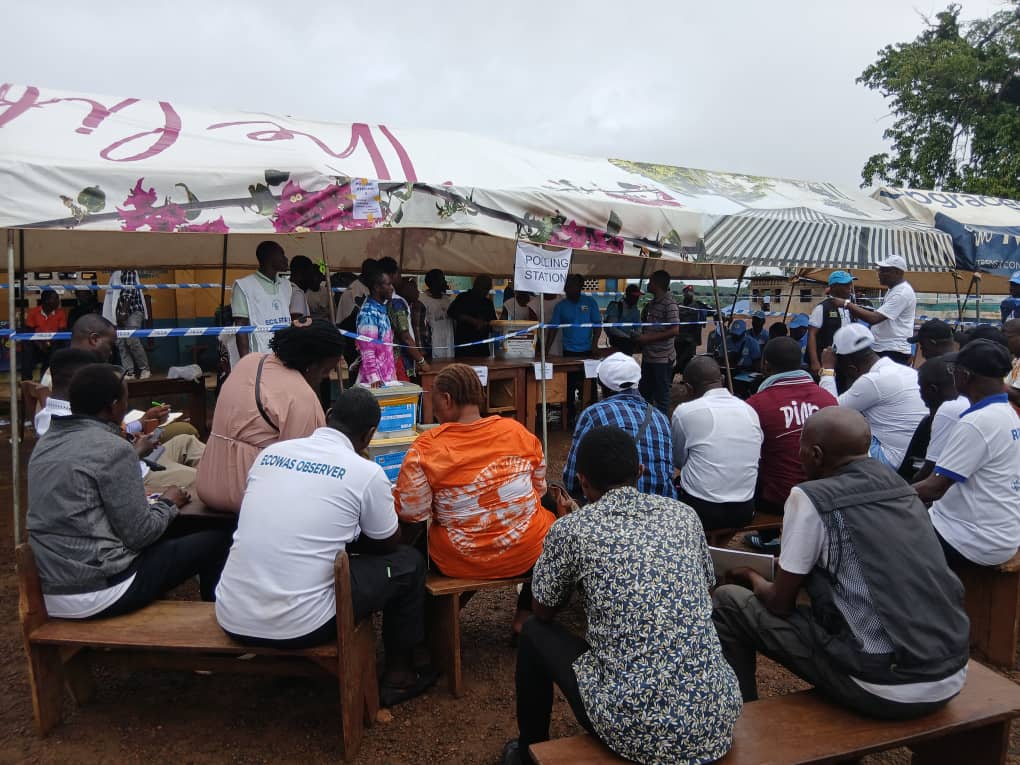
The contest lived up to expectations, drawing one of the highest levels of participation in the chiefdom’s history. During the first round of voting, Kebbie secured 389 votes, while his closest challenger, Sama Kai-Magbie, received 217 votes. Although Kebbie established an early lead, he fell short of the required 55 percent threshold needed to secure an outright victory, forcing the election into a runoff. More than 900 of the 932 Traditional Authorities participated in the first round, reflecting the importance attached to the election.
As attention shifted to the decisive second ballot, the political equation changed. The Sengeh Ruling House, whose candidate finished third in the first round, entered into a strategic alliance with the Kebbie camp. The alliance was widely regarded as a decisive moment in the contest, significantly expanding Maada Joe Kpunyeh Kebbie’s support base and giving him crucial momentum heading into the runoff.
When the Traditional Authorities returned to vote, that momentum became evident. Of the 901 voters who participated in the runoff, 885 valid votes were cast, while 16 ballots were declared invalid.
Maada Joe Kpunyeh Kebbie secured a commanding 554 valid votes, while Honourable Shiaka Musa Sama Kai-Magbie polled 285 votes, earning Kebbie a convincing mandate to become the new Paramount Chief of Malen Chiefdom.
The official declaration was made by Provincial Secretary South and Declaration Officer, Abu Bakarr Kamara, triggering jubilant celebrations among supporters who had waited patiently throughout the day. Songs, dancing and traditional celebrations erupted across Sahn Malen as supporters hailed the continuation of the Kebbie family’s historic leadership.
A Victory for Peace
Beyond the outcome, what distinguished the Malen election was the peaceful and orderly manner in which it was conducted. The election took place under heavy security, yet the presence of law enforcement remained largely precautionary as polling and counting proceeded without major incident. Independent observers described the process as free, fair, transparent and credible.
Isaac Sundifu Koroma, Acting Head of the Civil Society Movement in Pujehun District, praised both the electoral process and the conduct of the people of Malen.
“We are satisfied with the entire election process. The Malen election has been the most peaceful compared to previous elections conducted in the district. We commend the people of Malen for conducting themselves peacefully,” he said.
Koroma’s assessment echoed the views of many election observers who believe the process had established a new benchmark for traditional elections in the district.
The Declaration Officer, who is also the Provincial Secretary for Southern Region, Abu Bakarr Kamara also reflected on the significance of the occasion.
“Since I started conducting elections in the Southern Region, the Malen election will go down in history as the most peaceful, despite disagreements during the initial stages of the process, especially during the assessment, stakeholder engagements and review,” he said.
Kamara’s remarks underscored how dialogue, institutional processes and respect for established procedures ultimately prevailed over earlier disagreements.
More Than an Election
The election of Maada Joe Kpunyeh Kebbie marks the beginning of a new chapter for Malen Chiefdom. As the eldest son of the late Paramount Chief Brima Victor Siddie Kebbie, expectations are high that he will build on his father’s legacy while responding to the aspirations of a rapidly evolving chiefdom.
For the people of Malen, the election was more than a contest for traditional leadership. It became a demonstration that even a highly competitive race involving influential personalities and competing political interests could be resolved peacefully through the ballot.
Thousands travelled to Sahn expecting history to be mde. They returned home having witnessed a peaceful democratic exercise that reinforced the enduring strength of Malen’s traditional institutions.
The peaceful conduct of the election, the overwhelming participation of the Traditional Authorities, the strategic alliances that shaped the runoff, and the broad acceptance of the outcome may ensure that the 2026 Malen Paramount Chieftaincy Election is remembered not only for extending the Kebbie family’s century-long leadership, but also for setting a new standard for peaceful, transparent and credible traditional elections in Sierra Leone.