






By Kemo Cham
The National Public Health Agency (NPHA-SL) and the Children’s Advocacy Forum (CAF-SL) have mounted a campaign to raise awareness about meningitis, a deadly disease that affects the brain and spinal cord.
Meningitis is an inflammation of the protective membranes, called the meninges, that surround the brain and spinal cord. It affects all group ages, but most frequently babies, young children, teenagers and young adults. Its main symptoms include fever and stiff neck.
The disease can spread from person to person through respiratory droplets by coughing and sneezing, as well as through throat secretions by kissing, sharing cups, utensils, and toothbrushes.
Some forms of the causative agents, specifically Group B streptococcus, can be spread from mother to child during childbirth. Other means of transmission are through the environment and water contamination.
The good news is that Meningitis is entirely preventable through vaccination and good hygiene practices. But the high number of suspected cases captured by surveillance data in Sierra Leone points to a worrying level of vaccination gap, calling for more efforts on that front.
According to the World Health Organization (WHO), Sierra Leone is located near the African Meningitis belt, making it prone to transmission of the disease. But due to lack of diagnostic capacity, the country’s meningitis response has been largely weak.
Meningitis is caused by various agents, including bacteria, virus, fungi and some parasites. But bacterial meningitis is said to be the most dangerous of them all. Data provided by the surveillance unit of the NPHA indicates that bacterial meningitis is the most prevalent form of infections of the disease in the country. According to the data, in the last nine months of 2026, over 300 suspected cases have been reported. It is unclear how many of those were tested or confirmed positive due to lack of capacity.
Samuel Sama Turay, Surveillance Officer and Focal for Bacterial Meningitis in the NPHA, said the disease has been in transmission in Sierra Leone for decades but that it hadn’t received much attention, reflecting the lack of capacity to adequately deal with it.
“With bacterial meningitis, collecting the cerebrospinal fluid, which is the sample they collect to analyze and confirm that it is bacterial meningitis, we have limited capacity to carry out that function,” he said.
Globally, 2.5 million cases are reported annually, according to WHO. The disease is also said to have a high mortality rate – up to 1 in 10 patients dying. One in 5 people who survive deal with long-term complications like hearing loss, seizures, and cognitive impairment.
Sierra Leone is a party to the WHO Global Roadmap to Defeat Meningitis by 2030. The country has a national strategic plan, which is a major step towards this effort. But observers warned that more investment is needed to fully implement this plan, with a focus on improving on prevention, diagnostics and ensuring timely treatment.
This campaign by the NPHA and CAF-SL is supported by the Confederation of Meningitis Organization (CoMO) Global Advisory Council, which advocates for change to global and national policies in the fight against the disease. Sierra Leonean civil society activist Mohamed Samura is the Council’s Regional Representative for Africa. He said that said that despite challenges, Sierra Leone has registered some progress towards elimination, warning however of the need for more efforts.
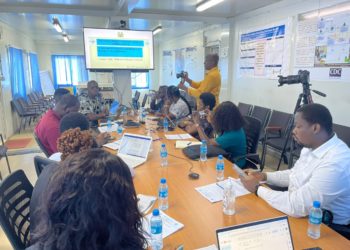
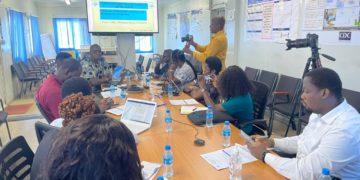
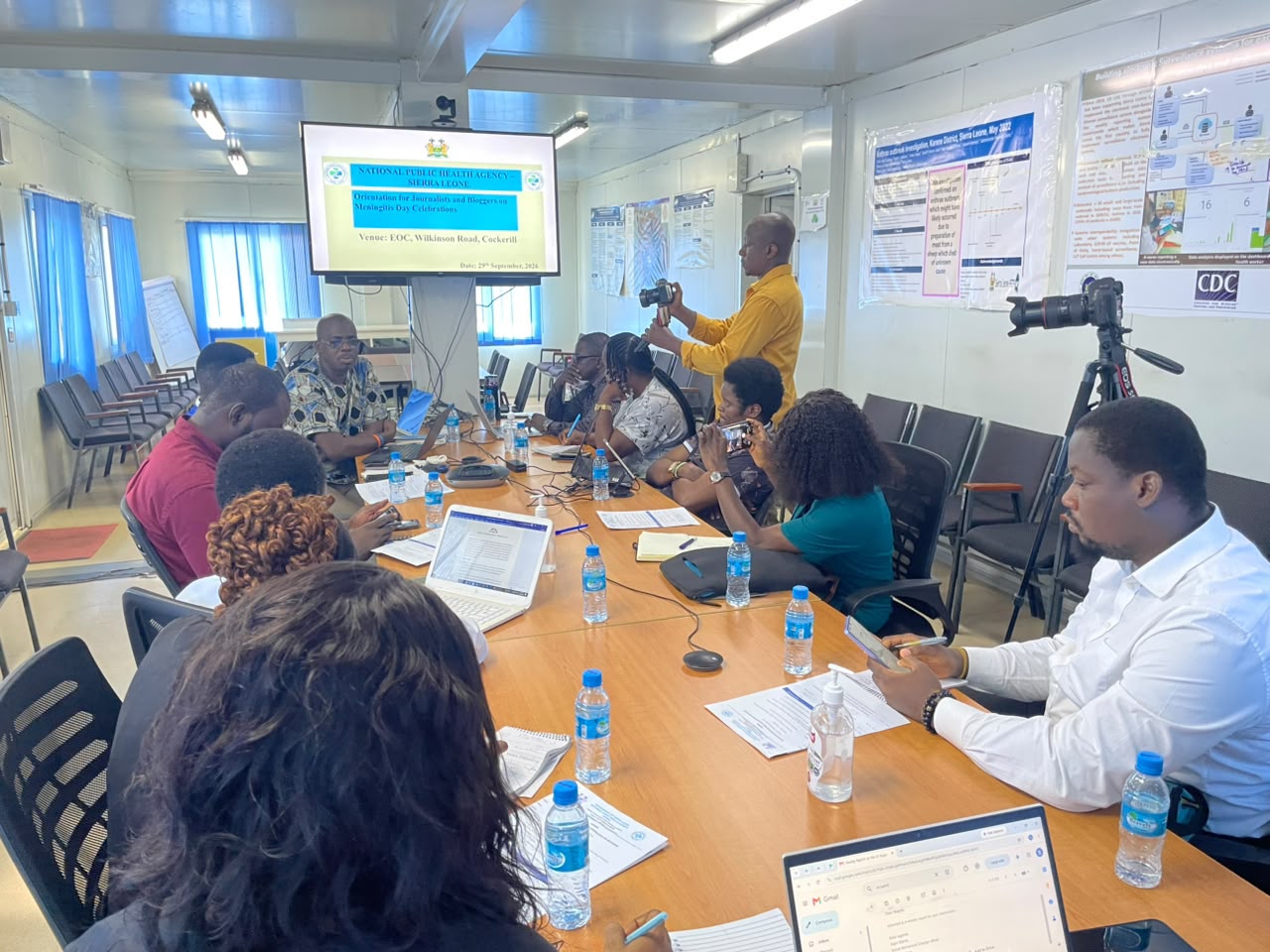
Mr Samura also serves as Programme Manager for CAF-SL, which collaborated with NPHA to conduct an orientation for journalists and bloggers on Tuesday, September 29. The goal is to strengthen the understanding of reporters on the disease and equip them with accurate, timely and relevant information to support public awareness, said the organizations.
“We are doing a lot with little to no resources,” Samura told reporters and bloggers in a statement during the opening ceremony of the three-hour long session at the Emergency Operations Center of the Ministry of Health in Freetown.
Officials at the event highlighted the critical role journalists and bloggers play in reaching and engaging large audiences, particularly through digital and social media platforms, hoping that by strengthening their knowledge of meningitis, they can help communicate clear health messages, address misinformation and encourage communities to recognize symptoms and seek appropriate care early.
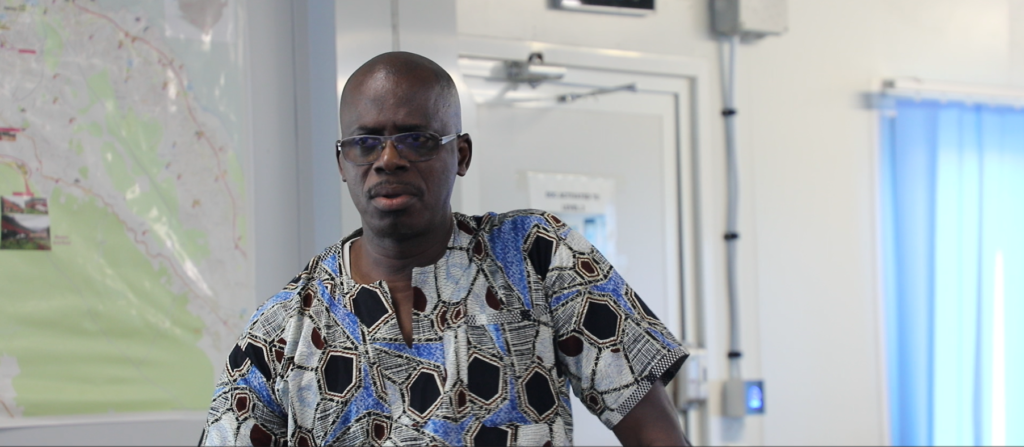
Dr Sam Kanu, Programme Manager, Surveillance and Applied Epidemiology, NPHA, made a comprehensive presentation on the epidemiology of Meningitis and the role of the various stakeholders in efforts to eliminate it.
“Ending meningitis requires more than the efforts of the health sector alone,” he said in his power point presentation.
“Strong collaboration among government institutions, partners, media professionals, communities and other stakeholders is essential to strengthen prevention, early detection, public awareness and response efforts,” he stressed.
The orientation comes ahead of commemoration of World Meningitis Day on October 5th. The day was designated by CoMO, which is a global network of patient and family organizations affected by the disease, alongside the Meningitis Research Foundation. The aim is to raise public awareness on it, its prevention, signs and symptoms, and the importance of timely healthcare-seeking. The orientation is part of activities marking what would be the second time Sierra Leone will be commemorating the day.
Abdul KD Swaray, Executive Director of CAF-SL, emphasized on the importance of accurate reporting in ensuring effective public health communication.
“The media – bloggers and journalists – has a key role to play. Before the information goes out, we want to ensure it is accurate,” he said.
As part of this campaign, a Health Walk is planned for Saturday October 3rd, to be followed by a symposium on Monday, October 5th.