







By Kemo Cham

Sierra Leone has launched a digital travel portal it hopes will enhance the experience of passengers while ensuring effective disease surveillance at its airport and other points of entries. The initiative is part of the country’s response to the threat of the ongoing Ebola epidemic in east and central Africa. But officials said that it will also come in handy for the growing threats posed by emerging pathogens with pandemic potential, like Covid.
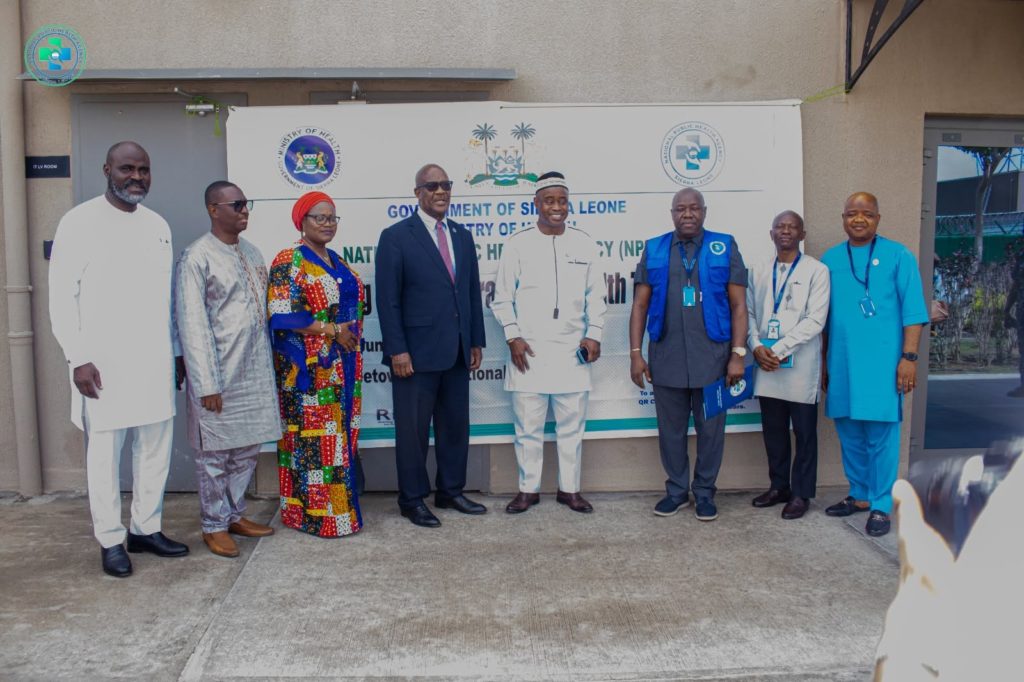
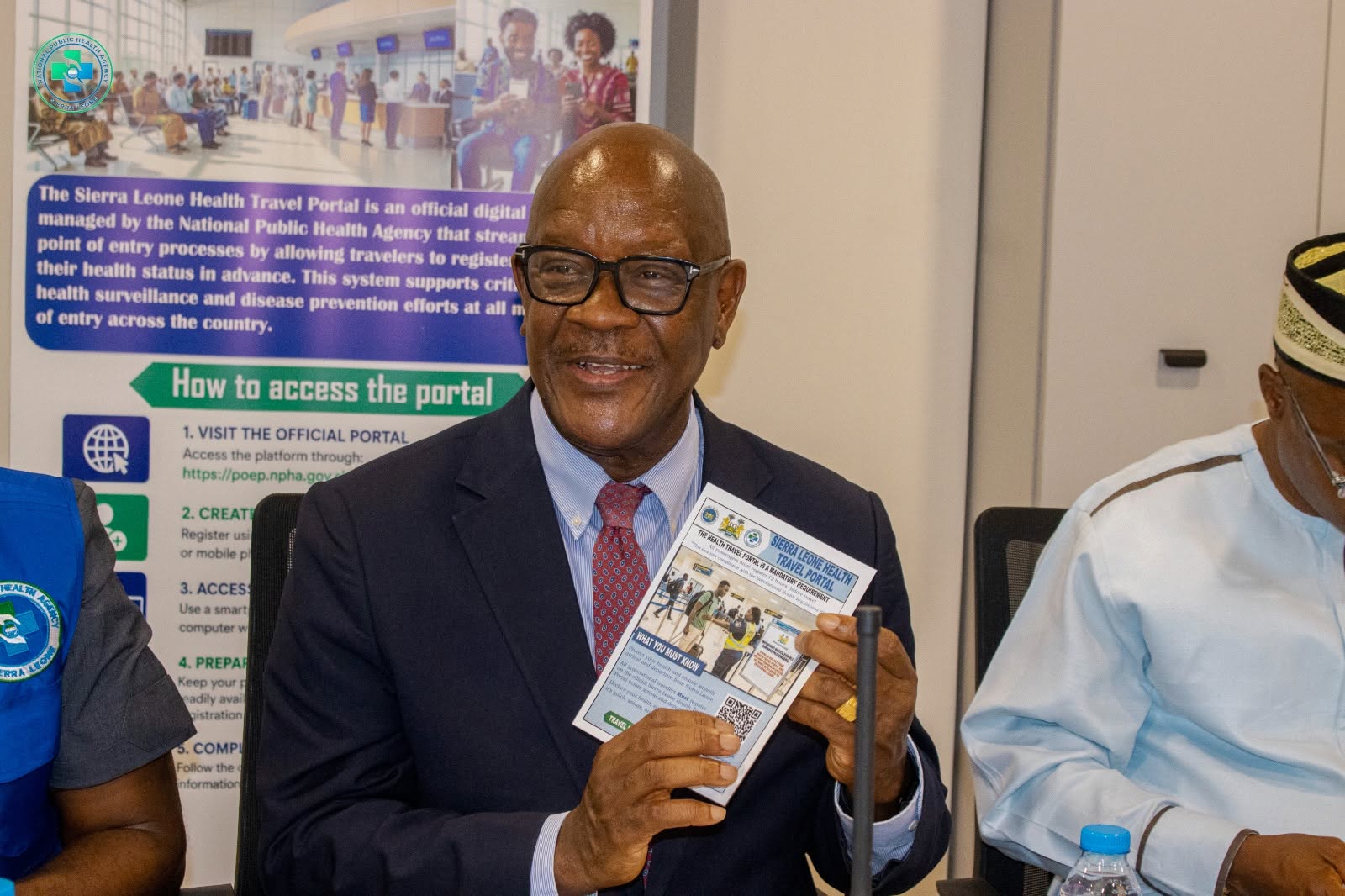
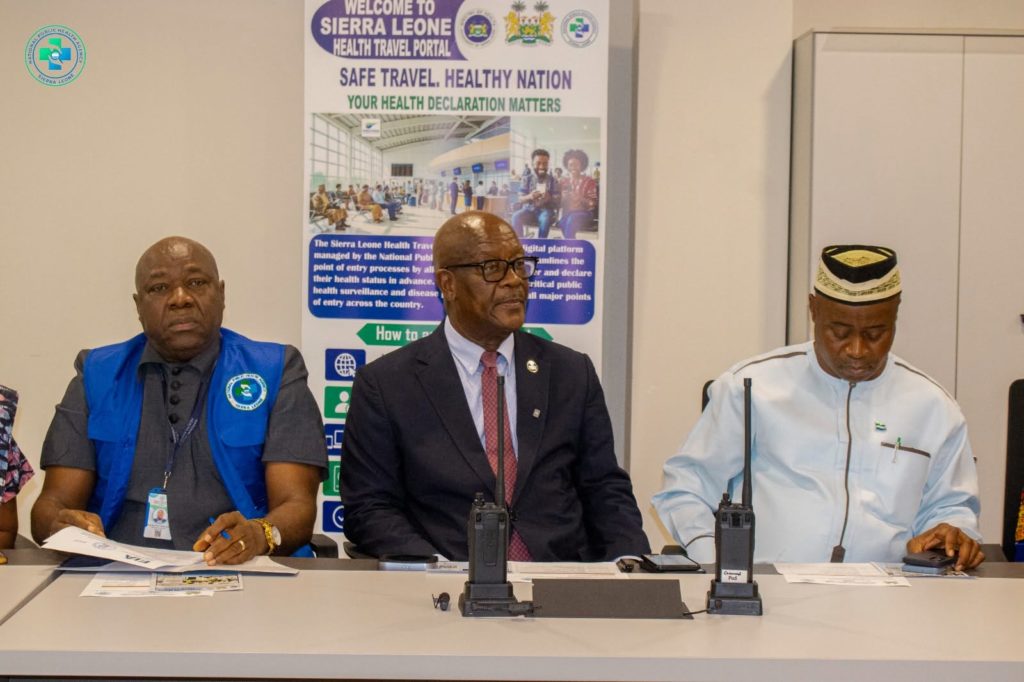
The Sierra Leone Health Travel Portal, which was launched at the Freetown International Airport (FIA) in Lungi on Friday, June 5th, is a centralized digital platform through which travelers can conveniently submit health information and documentation required for entry and departure from the country. It replaces the paper-based system previously used, which officials say was slow and unreliable.
The portal also provides travelers with timely and accurate updates on health protocols, travel advisories, and entry requirements, ensuring that passengers remain well-informed before and during their journeys, officials from the Ministry of Health (MoH) and the National Public Health Agency (NPHA) said at the launching ceremony.
Before traveling, passengers will be required to complete a short declaration. Completion of this will be a requirement before boarding the flight, the officials said. They noted that airlines operating in the country will be required to check and ensure this rule is strictly adhered to. The MoH and NPHA will access the information in real time to allow pre-arrival risk screening to speed up processing and begin contact tracing if the need arose, explained Prof. Foday Sahr, Executive Director of the NPHA.
The government says this innovative initiative reflects its continued dedication to leveraging technology to strengthen health systems, enhance border health management, and protect the well-being of residents and visitors alike in an increasingly interconnected world.
The Ebola epidemic has affected two countries so far: the Democratic Republic of Congo (DRC) and Uganda, with over 450 confirmed cases and about 80 fatalities between the two countries, according to WHO data. DRC is the most affected between the two, with the majority of cases and fatalities.
The WHO and the Africa Centers for Disease Control and Prevention (Africa CDC) have both declared the outbreak an Emergency of Continental Security and of International concern, respectively.
The Sierra Leone government says while every indication points to a lesser risk for cross border transmission of the virus into the country, it chooses to learn from previous experience. Sierra Leone, alongside neighbours Liberia and Guinea were the most affected by the 2014-2016 West African Ebola epidemic, which is on record as the largest and deadliest of the viral disease.
That experience has left the public always highly concerned when such international emergencies occur. And this has led to increased speculations about possible cases in the country. But officials have stressed that there is no case presently in the country.
“Sierra Leone is currently safe. We are acting early, not in fear,” said Prof. Sahr.
“We are acting because early action is what protects a nation,” he added.
“Sierra Leone knows the cost of acting late. We also know the value of acting early,” adds Andrew L. Sorie, Senior Permanent Secretary in the Health Ministry.
Another source of huge concern from the current epidemic is the nonavailability of vaccine or treatment options for the strain responsible for the outbreak – Bundibugyo. The Africa CDC says it is working with WHO and other international partners to fast track development of both vaccines and therapeutics for the virus.
For Prof. Sahr, this calls for even more proactive measures.
“The lack of vaccine and treatment places on it a high premium for early detection and rapid response,” he said. “Diseases move with people. They move quickly. The threat is real and it is current.”
As Sierra Leone’s top public health authority, Prof. Sahr said the travel portal also advances the country’s obligation under the WHO’s International Health Regulations of 2005, which place strong screening and surveillance at point of entry at the center of national health security. He also noted that Ebola is not the only threat of concern, citing Mpox, which is still in some neighbouring countries; Lassa fever, which is endemic to Sierra Leone; as well as the Marburg virus in both west and eastern Africa.
“In almost every case, international travel is the route by which such threats cross the border,” he said, stressing on the importance of focusing this initiative on air travel. He however added that plans were underway to introduce the same to other land and water entry points across the country.
Health Minister Dr Austin Demby stressed the importance of preparedness and why the focus is on air transport.
“It’s likely to come in either by road or by sea. But the easiest way is by air,” he said.