






By Kemo Cham
Former Liberian President Ellen Johnson Sirleaf has been named as chair of a High-Level Committee instituted by the Africa Centers for Disease Control and Prevention (Africa CDC) to champion reform of the global health architecture.
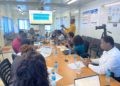
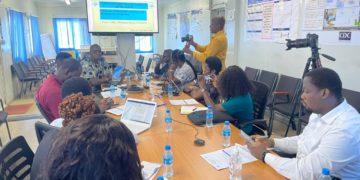
The African High-Level Ministerial Committee on Global Health Architecture Reform (AHLMC) was launched at the margins of the World Health Summit Regional Meeting 2026 in Nairobi, Kenya. It brings together Ministers of Health and Finance from African Union Member States with the objective of consolidating the continent’s voice, strengthen political coordination, and advance a unified African position on global health governance reform.
According to a news release from Africa CDC, the committee’s task was designed to provide stewardship, strategic coherence, and accountability for Africa’s engagement across interconnected reform processes, including the Pandemic Agreement and related annexes, International Health Regulations implementation discussions, UN80-linked reforms, and wider global health financing debates.
“Africa carries a disproportionate burden of disease, yet its voice in global decision-making remains limited,” Mahmoud Ali Youssouf, Chairperson of the African Union Commission, is quoted saying at the launch, noting: “This is not sustainable, and it is not acceptable. With the Committee, we will speak with one voice—stronger, clearer, and more influential—in shaping global health policies.”
Africa CDC is the public health agency of the African Union. It serves as an autonomous institution that supports Member States to strengthen health systems, improve disease surveillance, and enhance emergency preparedness and response.
The agency said recent crises, including COVID-19, mpox, cholera and Marburg outbreaks, as well as antimicrobial resistance, and climate-related health risks, have exposed structural inequities in access to medical countermeasures, technology transfer, data, and financing. At the same time, it notes, declining external support is placing additional pressure on African health systems.
Africa CDC cites experts warning that Official Development Assistance for health fell by an estimated USD 31.1 billion in 2025, with further reductions expected in 2026, which it said underscored the urgency of more resilient, equitable, and better-aligned health governance and financing arrangements.

This High-Level Committee is therefore expected to chart a new path, moving from fragmented engagement to coordinated continental action, serving as a political vehicle for more systematic engagement in global rule-setting and financing processes.
Dr Jean Kaseya, Director General of Africa CDC, stressed the urgency of reforming global health systems to reflect Africa’s priorities, realities, and ambitions.
“The old model is no longer fit for purpose. Africa cannot continue to be a passive recipient of global health decisions. This Committee is about power, voice, and ownership, ensuring that Africa acts collectively and shapes the systems that determine our future,” he said at the launch.
Africa CDC says the AHLMC is a central pillar of the continent’s Health Security and Sovereignty agenda and will drive action across five thematic areas: leadership reform and governance; financial sovereignty; data sovereignty and digitalisation; product sovereignty and local manufacturing; and pandemic prevention, preparedness, and response. The committee’s task entails defining a consolidated African reform platform, coordinate ministerial engagement, develop guidance on common negotiating positions, and support reforms that strengthen the continent’s representation, reduce duplication, align financing, and reinforce continental institutions.
“The Committee will serve as a high-level platform to translate political commitment into concrete outcomes, including coordinated African positions in global negotiations, strengthened domestic financing, and expanded access to essential health products,” the agency said in its news release.
President Sirleaf said the establishment of the committee is “timely and necessary”, noting that it signals that Africa is organising itself with purpose, coherence, and a united voice.
“This moment is not about rhetoric; it is about responsibility,” she said.
“That means ensuring health funding is predictable and aligned with national priorities; strengthening institutions so that primary healthcare, data systems, and workforce capacity are foundational; and advancing equity, so that access to vaccines and technology is guided not by geography, but by humanity.”