








By Kemo Cham
The looming condom crisis poses a significant threat to Africa’s response to the HIV pandemic and points to the need to boost the continent’s local manufacturing capacity, a top official at the Africa Centers for Disease Control and Prevention (Africa CDC) has warned.
Dr Landry Dongmo Tsague, Director of Africa CDC’s Center for Primary Health Care, said increasing the cost of condom by even one percent could counter prevention efforts against the viral disease with a high prevalence rate on the continent.
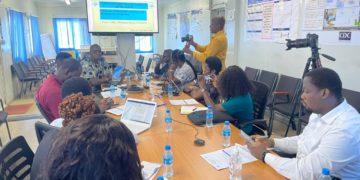
“HIV is a health security matter for our continent. We still record the highest incidents of HIV globally and HIV related deaths. And we know the place of condom among the protective measures,” Dr Landry told journalists during Africa CDC’s weekly press briefing on Thursday, April 23, 2026.
“So increasing the cost by even one percent, and in this case we are talking about almost 40 percent, is a significant threat to our HIV response, particularly around prevention,” he said.
Dr Landry was speaking in response to reports that the world’s largest condom manufacturer, Karex Bhd, intended to increase cost by 20 – 30 percent – and potentially higher. The Malaysian company based its decision on the effect of the US/Israel-Iran war, which it said had disrupted global supply chains and drove up raw material costs. With an annual production of 5 billion condoms, Karex accounts for about one fifth of global supply of this essential tool for sexual health.

Credit, https://www.tovima.com/
Condoms are considered as the only contraceptive method that simultaneously prevents unintended pregnancy and reduces the chances of transmission of STIs and HIV. According to the World Health Organization (WHO), when used correctly, they are up to 98% effective at preventing pregnancy and highly effective against infections like HIV, chlamydia and gonorrhea.
According to the UNAIDS’ Global AIDS Update 2025, as of 2024, 40.8 million people are living with HIV globally, and new infections remain high at 1.3 million. While the report notes that significant long-term progress has been made with new HIV infections down 40% and AIDS-related deaths down 56% since 2010, it warns that the response is facing a funding crisis that threatens to derail this progress.
Africa accounts for the largest number of people living with HIV (26.3 million), according to the UN data; yet the continent produces less than one percent of total condom produced globally.
Condom is an essential part of Sierra Leone’s HIV prevention programme and the country depends largely on donations.
Social Linkages for Youth Development and Child Link (SLYDCL), a community based organization, offers safe zones and protection for vulnerable young people, including Key Populations across the country. Habib Kamara, Executive Director of the organization, is worried that increase in the cost of condom could have a serious implication on the services they provide if its donors reduce or stop providing condom to his organization for free as a result of high cost.
“Many cannot afford to buy condoms regularly, risky behaviors may increase due to lack of access and existing inequalities in health outcomes will worsen,” he said.
Dr Landry said this development therefore should serve as a “wake up call” for the continent’s leaders. And his warning re-echoes Africa CDC’s new Africa Health Security and Sovereignty (AHSS) agenda, the brainchild of its Director General Dr Jean Kaseya. Local manufacturing of health products, one of five pillars of the blue print, seeks to drive up production of vaccines, diagnostics, and therapeutics on the continent.
According to the continental public health agency, currently, Africa produces less than one percent of vaccines and less than 10 percent of therapeutics and other health commodities.
Dr Landry stressed that the focus is on manufacturing capacity for all health commodities crucial for the continent’s public health priorities – including HIV and malaria.
Reports suggest that the US/Israel-Iran war not only affected condom manufacturing, but also many other rubber products like gloves, which is an essential infection prevention control tool.
“As we look at strengthening our health security and sovereignty, we are looking at it across the board, and we are also looking at it with a clear focus on the high burden diseases,” said Dr Landry.
“For condoms as for our HIV diagnostics or for Anti-Retroviral treatment, the message is clear around local manufacturing. We want to move from manufacturing less than one percent for the vaccines or less than 10 percent for therapeutics and other health commodities, to manufacturing over 60 percent of those commodities that we are using on the continent by 2040.”