








By Kemo Cham
A controversial plan by the government to re-demarcate the boundaries of one of Sierra Leone’s most prominent forest parks has ignited a national debate on balancing urban development and environmental protection. Faced with dwindling forest and its consequent environmental disasters, the response of the government, it seems, is the shocking decision to cut down the size of the Western Area Peninsula National Park (WAPNP), which is described by conservationist as the last defense of the nation’s capital.
According to reports, the proposal was floated by the Ministry of Lands, Housing, and Country Planning and the National Protected Area Authority (NPAA). The decision is based on a report from an assessment of environmental damage on the park. But environmental rights activists quickly kicked against it, calling the plan a “direct assault” on one of the country’s most vital ecological assets. The activists issued a statement under the banner of a coalition of Civil Society Organizations, strongly condemning the move, pointing at its potential impact on water security, biodiversity, and environmental sustainability.
“We view this proposal as a direct assault on the ecological integrity of one of Sierra Leone’s most critical environmental assets,” the group, which include some of the country’s renowned environmental advocacy organizations, like Namati, said in the statement.
The WAPNP is a 17,000-hectare biodiversity-rich protected tropical rainforest located in the southern end of the Western Area of Sierra Leone, which comprises the capital Freetown and its environs. The area is home to over 60 water catchment areas, which collectively supply over 90 percent of the water needs of the Sierra Leonean capital and surrounding communities.
The park has been the subject of all sorts of illegal activities that government and environmentalists say has led to a substantial loss of forest cover in the last decade, resulting in shrinking water levels in the many dams there and exposing the city to threats of climate change.
According to people familiar with the level of environmental destruction in the park, it has lost over 5,000 hectares of forest cover in the last 10 years.
If the intention to re-demarcate goes as planned, it will see 5,000 hectares, representing a staggering 28.9% of the forest, be removed from the current size of 17,185 hectares.
“The WAPNP is not just a forest, it is a vital watershed that supplies the bulk of the region’s water, a refuge for endangered species, and a vital defense against the accelerating impacts of climate change,” the group of environmental activists stressed in its statement shared with the media.
A key argument by them is that reducing the size of the national park will result to environmental consequences like undermining water security, citing the threat that key water catchment areas like the Guma Valley Dam and others already face. According to the pressure groups, the impact of resizing WAPNP will also lead to accelerated biodiversity loss in an area that is home to rare and endangered plant and animal species, noting that shrinking the forest boundary threatens those ecosystems and could drive several species toward extinction, and increase disaster risk by promoting landslides and flooding, all of which have been linked to deforestation in the peninsula forest. There are also concerns that the move could lead to further encroachment and heightens the risk to human life and property.
“We are deeply concerned by the lack of public consultation, transparency, and scientific justification accompanying this proposal,” the group said. “Decisions with such far-reaching consequences for national sustainability must be subject to inclusive, participatory, and evidence-based processes. We call on the government to immediately halt any plans to alter the WAPNP boundaries and recommit to upholding its international and national obligations to protect biodiversity and natural heritage.”
While urging the government to halt any plan to go ahead with such an action, the activists called for the resignation of the Executive Director of the NPPA for his failure to uphold his agency’s core mandate.
But it seems there is some support from the public for the decision to re-demarcate, although this is mostly influenced by political stance. Those who support, like Umaru Bendu, a resident of Mongeba, a community closed to the forest, say while forest is important, it is ultimately about humans who depend on it for their livelihoods.
“There is so much concern about plants and animals, but what about the humans?” Bendu enquired in an interview with ManoReporters. “Humans are obviously more important. And if the population of the city has increased, as we have been told repeatedly, space must be created for people to live in comfort.”
Amid the public debate, Chief Minister David Moinina Sengeh on August 12, led a large team of government and security officials on a tour of the Park. While the stated goal of the visit, according to reports, was to take firm action to secure and protect the forest from further damage, it also exposed the vast damaged already caused by encroachers. It revealed structures built and farming activities taking place within and too close to the park’s perimeter.
Dr Sengeh is quoted reaffirming government’s unwavering commitment to President Julius Maada Bio’s national development agenda, noting that the re-demarcation process was not intended to reduce the size of the park, rather, it was to expand and secure its boundaries. According to the Chief Minister, this will ensure the long-term sustainability of the ecosystem while addressing pressing issues of deforestation, encroachment, and illegal activities.
“The Western Area Peninsula is more than just a forest reserve,” he said.
“It is the main source of water for Freetown and its surrounding communities. Protecting it means protecting lives, livelihoods, and the future of our environment,” he added.
But concerns among environmental campaigners is born out of experience dealing with inconsistency in policy statements and actual action by government. The debate on the fate of the WAPNP has been going on for years. And despite promises of action by successive government officials, encroachment persists. Observers say while the encroachers grow stronger in terms of resources to exploit the park, counter security forces protecting the park and beat legal mechanisms, the NPAA has been largely under-resourced. The agency, for instance, boasts of less than 1,000 forest guards, who are largely unarmed and underpaid and demotivated.
After a visit to the Park in 2022 by President Julius Maada Bio, he sanctioned an investigation in response to the level of destruction he witnessed in the farm. The findings of the committee the president set up was presented to him in late 2023, prompting a presidential order for demolition of houses the following year. But months later, encroachment has only increased, with new and massive housing erected within and around the Park.
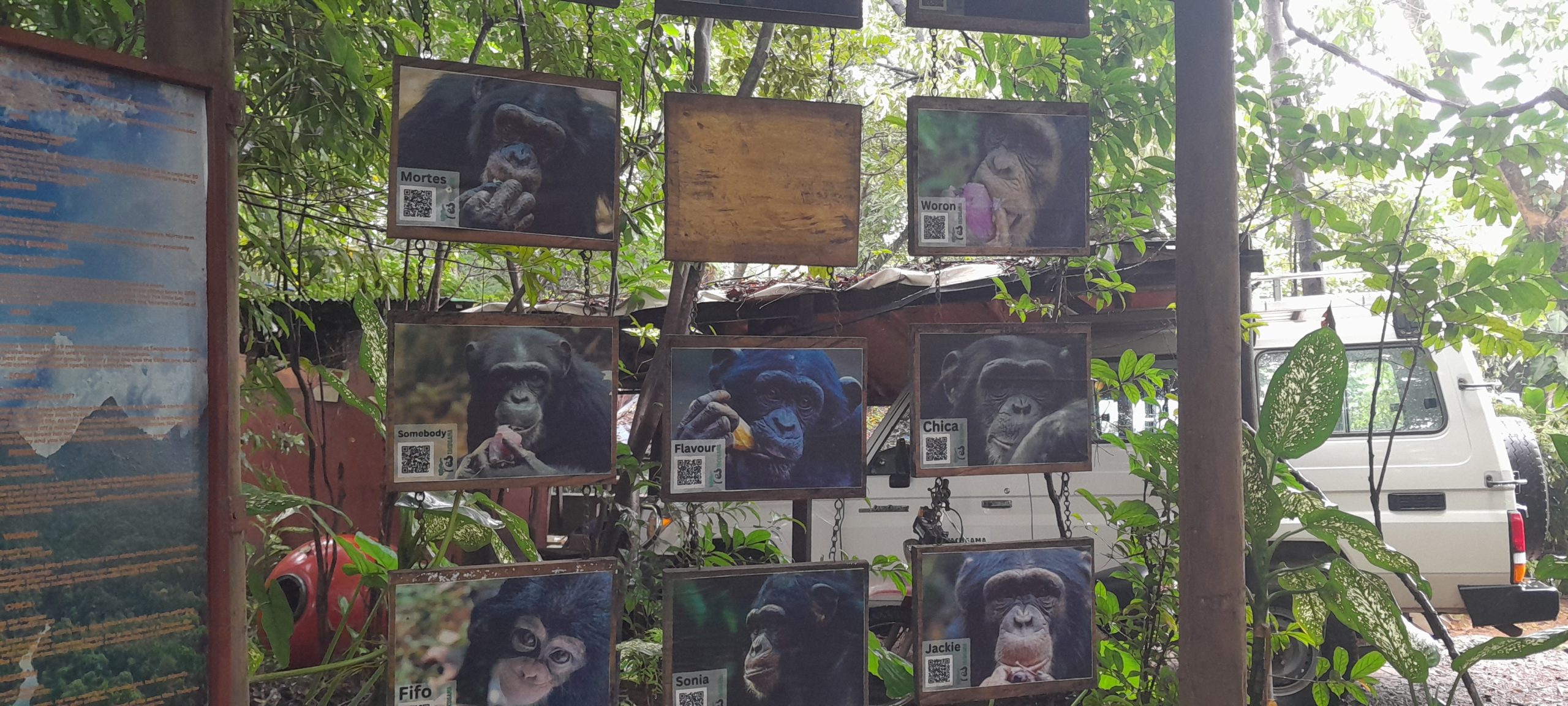
The Western Area Peninsula National Park is also home to the Tacugama Chimpanzee Sanctuary (TCS), which is home to dozens of Western Chimpanzees rescued from captivity. And the forest around the sanctuary is also home to many more of the animals that have been declared as facing extinction in the country. Bala Amarasekaran, Founder of Tacugama, has been very vocal about what he sees and government inaction against the encroachers. After repeated threats, his team shut the doors of the Sanctuary to the public at the end of May in protest against government inaction.
“We have beautiful laws, but if they are not implemented it is a waste of time of the people who have made these laws,” Mr Amarasekaran told ManoReporters in an exclusive interview last November.
A spokesman for the Park told ManoReporters in May this year, after announcing the closure of the Park, that they hope to see action taken soon by the government.
“The whole idea behind this action is to prompt the government to act swiftly and definitively, we want to see the concerns that we have about the park become a national concern with full backing from all government bodies concerned,” said Sidikie Bayoh, Communication Officer of Tacugama.